Great tech dies in the gap between building it and explaining it.
Marketing teams often lack the technical depth to understand a product's USPs, or enough market knowledge to know how your solution differentiates from competitors.
Tech teams, meanwhile, often lack the communication skills to make themselves clearly understood by their audience. Our team specialises in emerging technologies and has worked with numerous blockchain projects and AI-focused companies.
We provide intelligent content. We read your GitHub, dive deep into the tech and the whitepaper, then propose a plan using Generative Engine Optimization to turn it into engaging product explainers, podcasts and any type of content tailored to your audience, growing it organically.
The source
Dev Team
Deep, complex, technically true
ProtocolsCodeWhitepapers
Lemur Labs
Translation & clarity
The audience
Community & Clients
Clear, confident, convinced
UsersStakeholdersInstitutions
Trusted by the teams building innovation
One spec, many formats
How a single GitLab proposal becomes a published article, an infographic, a podcast clip, and a week of social content.
01 / 04
A governance change, buried in a repo.
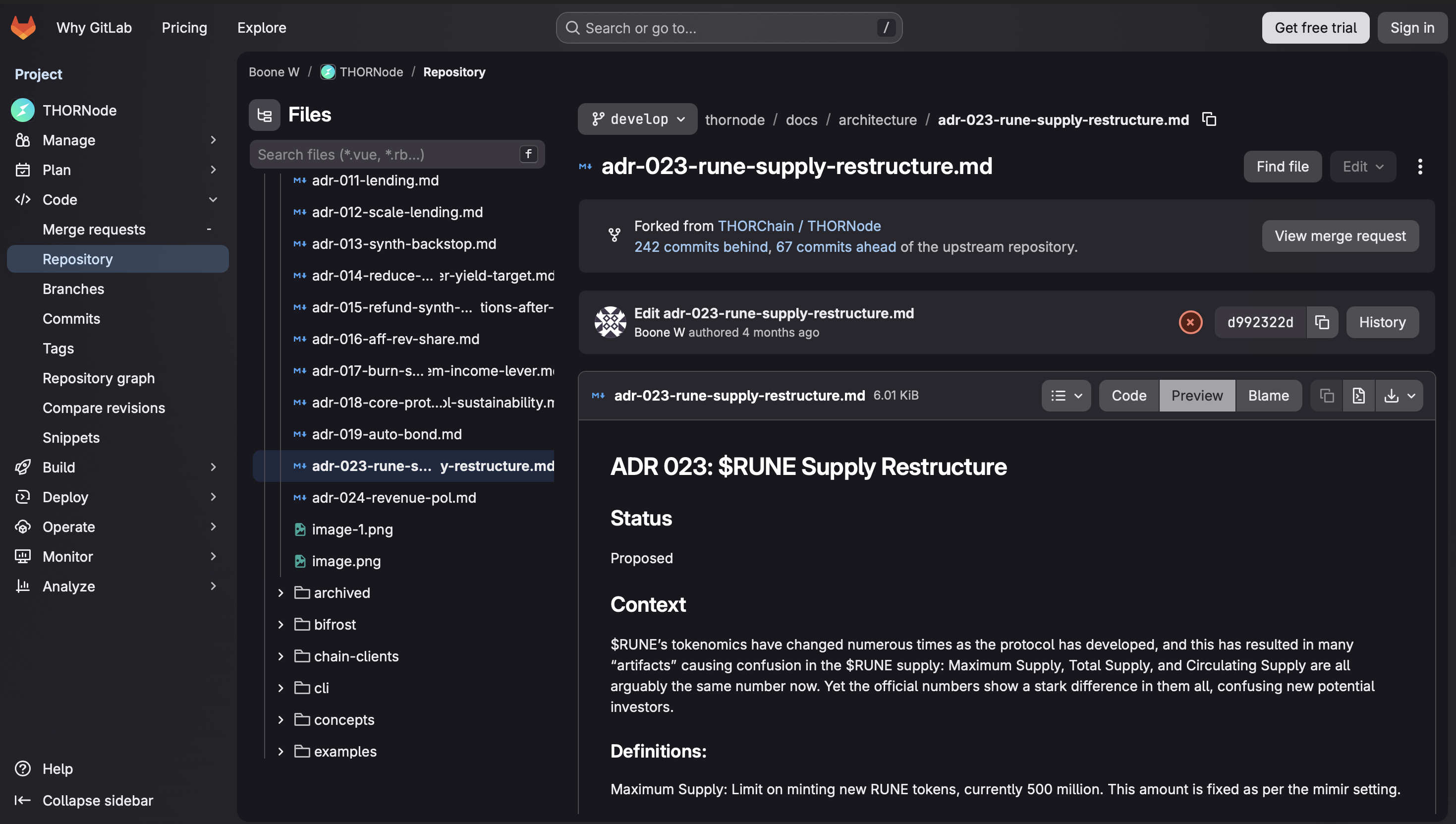
ADR-023 landed as a technical proposal on THORChain's GitLab, changing how RUNE's fully diluted valuation is calculated. Unreadable to anyone outside the protocol's core devs.
Finding the number that matters.
We read the spec, traced its effect through RUNE's supply and revenue mechanics, and isolated the one chart that makes the change legible, the actual shift in fully diluted valuation.
The deep dive, published.
Leading to a week of content.
Infographic
→
Podcast clip
→
Short post
The article is then decomposed into every format the audience actually cares about, podcasts, short video clips, infographics and short social posts.
Scroll to advance →
AI friendly for AI discoverability
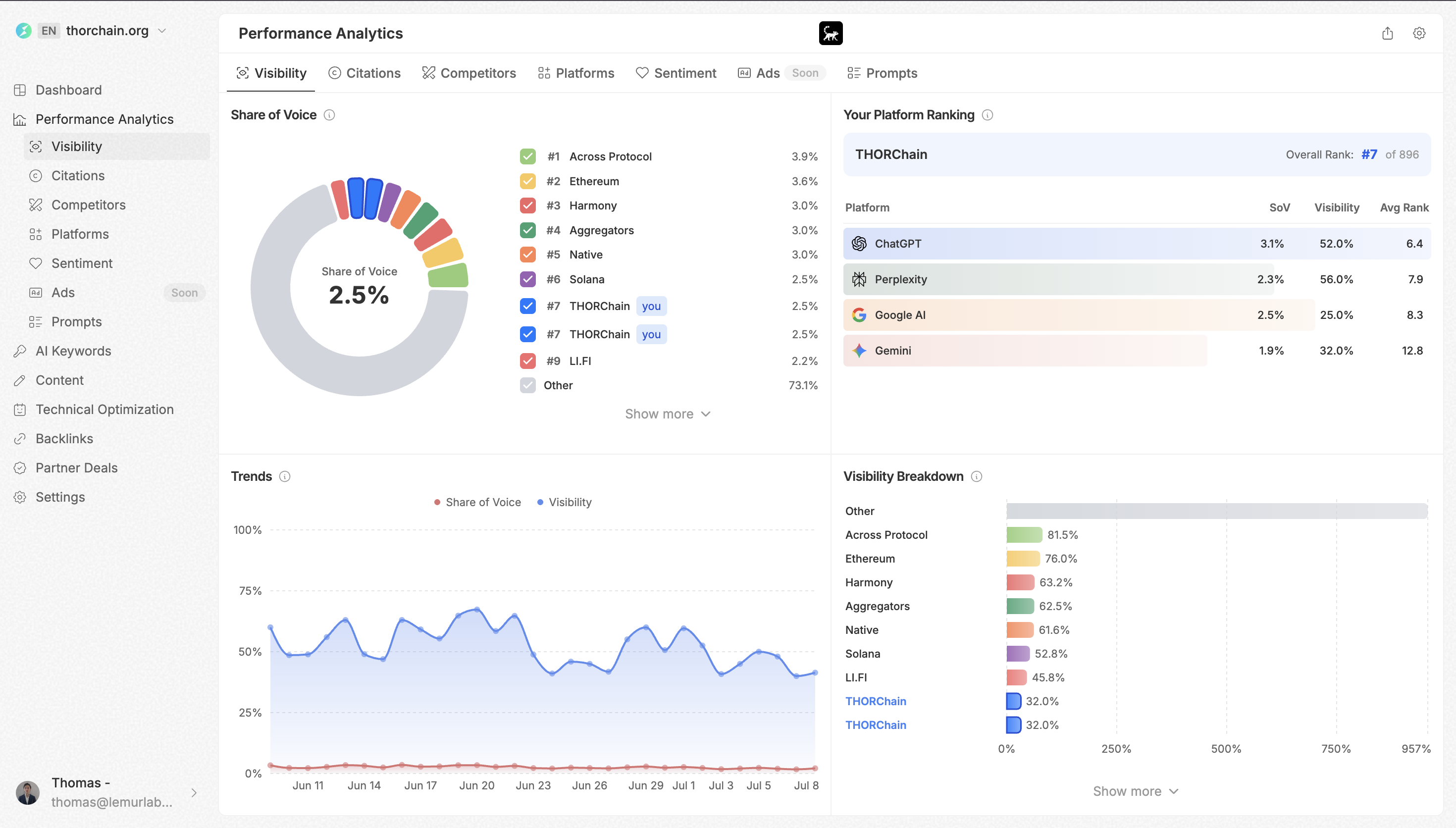
Using tailor-made GEO strategies, impactful narrative articles were crafted to increase THORChain’s visibility as users prompt AI about the space.
01 / 04
How AI already sees THORChain.
Visibility, share of voice, average rank and citations, tracked against competitors across the most used LLM's.
Picking the topics AI already trusts.
From the audit, we select the subjects the models are most likely to surface, the ones that put THORChain in the frame instead of a competitor.
A plan built for THORChain's PR agencies.
Those topics become a communication plan, positioned and sequenced with the agencies already running THORChain's PR.
Read one of the published articles.
Scroll to advance →
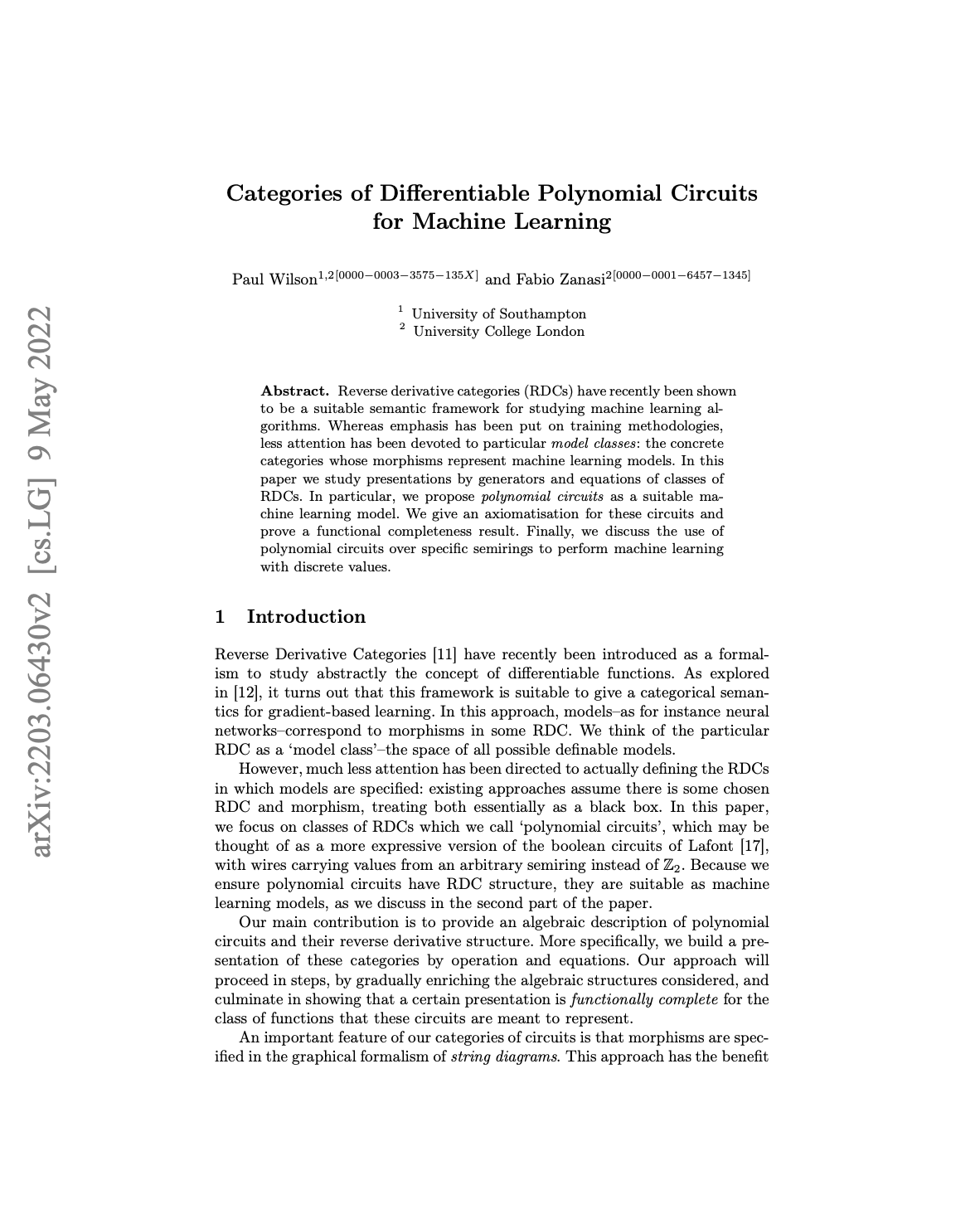
From a PhD maths paper to a published article.
Thirty pages of category theory, string diagrams and proofs, turned into something anyone can read and understand.
01 / 05
The Source Paper
Categories of Differentiable Polynomial Circuits for Machine Learning, reverse derivative categories, semirings and functional completeness proofs. Brilliant, and almost unreadable to anyone outside the field.
Lemur Analysis
Our analysts read every theorem, decode the notation and separate the signal from the scaffolding, flagging the handful of ideas that actually matter to a real audience.
Angle & Narrative
We find the story the maths is hiding, the one idea that makes a reader care, then build a narrative arc around it.
Pure maths explainer too niche
Tokenomics deep-dive off-message
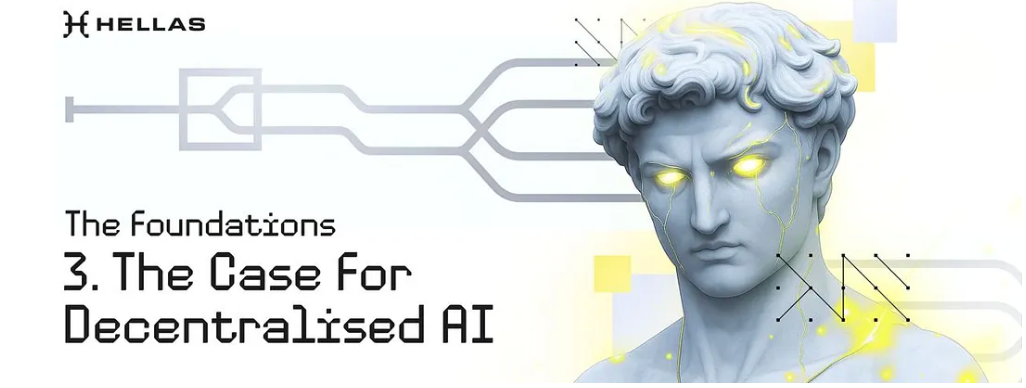
The case for decentralised AI ✓ chosen
HookTensionPayoff
The Published Article
A complete set of digestible articles on a blog later turned into social media content for organic growth.
Published
Scroll to advance →
Step 01 The Discovery
Together, we identify your pain points and pinpoint the narrative angle most likely to succeed.
Step 02 The Mix
Together, we decide the content types and level of support that fit your goals and needs.
Educational & Explanatory Content
Documentation (GitBook)
Foundational Articles
Blog Posts
Visual & Audio
Podcasts
AMAs & X-Spaces Hosting
Video Tutorials & Explainers
Infographics
Social Media Content
Organic Engagement
Community Spotlights
Short-Form Posts
Long-Form Threads
Strategy & Advisory
Positioning Analysis
Market Analysis
Product Consulting
Public Relations
PR Article Writing
Newsletters
BD Support
GEO
AI Visibility Audit
Technical Advisory
Tailor-Made AI Content
Step 03 The Improvement Loop
We continuously monitor performance and share a monthly data and KPI report with you and your angels. From there, we fine-tune the strategy, content mix, and tone to maintain impactful content for your audience.
01Publish
02Measure
03Adjust
Repeats monthly
KPI reportSeptember
128.4KImpressions+18% vs Aug
6.2%Engagement+2.1pt vs Aug
+3,140New followers+9% vs Aug
Audience reach
Followers 8.8%
Non-followers 91.2%
Impressions, weeklyW1 W2 W3 W4
Follower growth accelerated after the Sept 12 AMA thread.
Explainer video outperformed article reach by 3.1x.
Next cycle: double down on video, trim newsletter cadence.
1 / 4
Blog
GEO RESEARCH
AI-Powered SEO Strategy
How AI is transforming search engine optimization and content strategy in 2026.
The Lemurs
Analysts, writers, journalists, and communicators, a blend of expertise that will support you throughout your journey.
Richard Boccius
Co-founder and CMO
Turns complex protocol innovation into compelling narratives across video, podcasts, guides and infographics. Head of Growth & Comms at Denario, previously a communication trainer for AWS and Google.
Turns complex products and market data into clear, trustworthy insights, focused on tokenomics, on-chain analytics, and market intelligence. Previously at Cryptonary, Binance, MEXC, and a prominent research firm. Holds an MSc in Material Physics and Business Management.
Started in crypto at 19 as a news writer, publishing 900+ articles and hosting a founder-interview podcast, before moving into a Research Analyst role at Cryptonary. Now focused on data-driven research across DeFi, on-chain markets, and real-world assets. Brings a strong editorial and analytical background.
Drives AI-native marketing, UGC strategy and paid media, helping crypto and fintech brands get discovered on AI platforms like ChatGPT and Perplexity. Speaker at the E-Commerce Berlin Expo.
Community steward and big contributor to THORChain, very knowledgeable on DeFi. Specialises in cross-border collaboration, communication strategy, and content that connects researchers, builders and communities. Known for sharp community engagement and keeping a pulse on the latest Web3 trends and protocols.
Product lead and vibecoder building private AI tooling for companies, from research and lead-generation agents to a brand-agnostic marketing engine. Has run marketing and tokenomics modelling across crypto and digital ventures at Hellas, Kenomic and Criptan.
PhD in Computational Fluid Dynamics with 16 peer-reviewed publications. Applied his knowledge of quantitative modelling to sports betting before moving into Solana development. Built the NFT collection Metame before building the first Solana-native hardware wallet, Unruggable, and joining Superteam UK to support incubation.
Rebuilding intelligence from the ground up — how decentralised infrastructure changes what AI can be.
Hellas AINov 26, 20258 min read
This article examines how artificial intelligence can be built on decentralised infrastructure, rather than relying on a few large companies. It focuses on three key layers that make this possible: how compute and training can be distributed across independent networks, how models can be represented and executed in transparent ways, and how coordination and verification can keep these systems reliable.
Together, these layers show what a decentralised AI stack could look like and how it might make AI development more open, verifiable, and accessible.
The Centralisation of AI Infrastructure
The economics of artificial intelligence remain defined by concentration. The capital and infrastructure required to train state-of-the-art models have grown so large that only a few firms can participate directly.
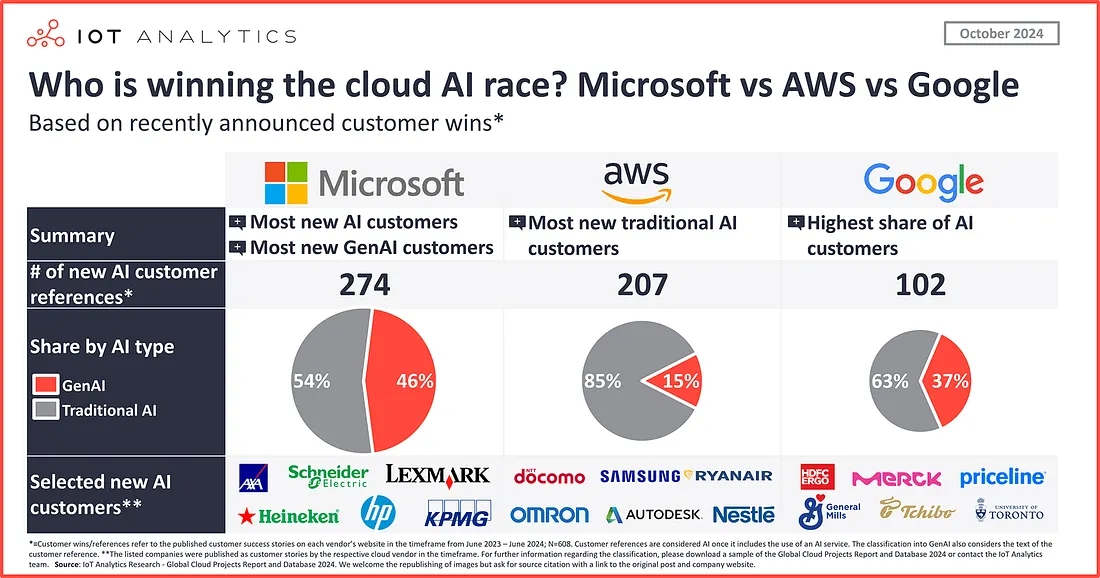
Recent data from the Centre on Regulation in Europe shows that this concentration is increasing. The three largest cloud providers now account for around 75% of the global public cloud market and are responsible for most new large-scale AI deployments.
In that sense, compute capacity has become a form of market power. The organisations that control this part of the AI stack effectively determine who can conduct frontier research, while others rely on access leased from the same cloud providers. The result is a growing structural divide between those who design intelligence and those who merely deploy it.
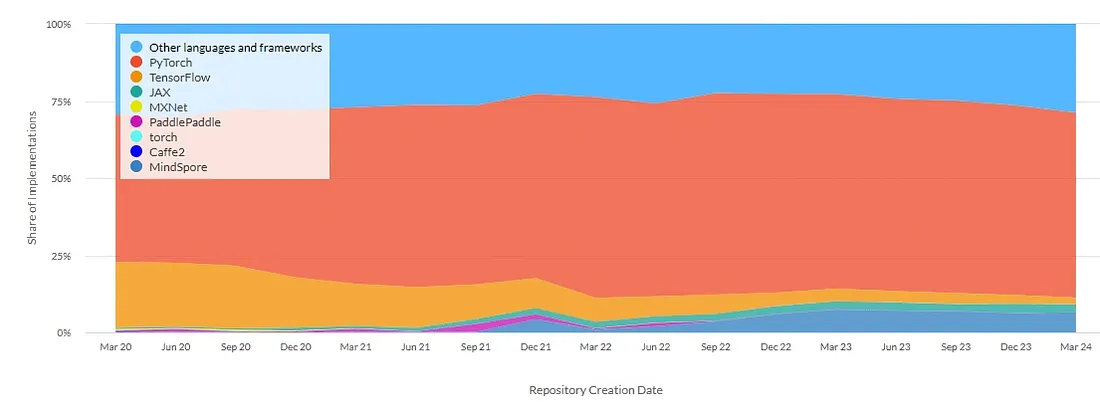
While centralisation at the compute and infrastructure level is already significant, this dependency also extends further into the software layer. Most modern AI systems are built and trained using a few platforms such as PyTorch and TensorFlow. These frameworks simplify the development of large models but also concentrate control over how those models are created and optimised.
Recent industry analyses indicate that PyTorch now accounts for approximately 55% of production usage, while TensorFlow maintains a strong position in large-scale deployment environments. Together, they support nearly all state-of-the-art model development, showing that the software layer of AI has become almost as consolidated as the hardware that supports it.
Centralisation across both hardware and software limits competition and slows innovation. Relying on a small group of providers also creates a single point of failure. Changes in pricing, policies, or technical availability at one level of the stack can quickly affect the entire field. Smaller organisations and researchers face additional barriers, as most development tools follow predefined workflows that are difficult to modify or reproduce outside the dominant ecosystems.
The Case for Decentralising the AI Stack
The concentration of compute and software control within a few firms has created structural dependencies that are increasingly difficult to unwind. Addressing these dependencies requires more than incremental openness; it demands decentralisation across the entire AI stack.
Partial decentralisation is not sufficient. Open-weight models, for example, still depend on proprietary frameworks and cloud infrastructure, meaning that access and verification remain limited. The result is a system that appears open in principle but functions as closed in practice. Unless decentralisation extends through both hardware and software layers, control over the direction of AI development will remain concentrated in the same institutional hands.
Full-stack decentralisation would separate the development and governance of intelligence from the ownership of infrastructure. Distributed compute, transparent model design, and interoperable software environments would allow research and deployment to occur independently of single providers. This structure would not only reduce concentration risk but also enable broader participation in model evaluation, replication, and improvement.
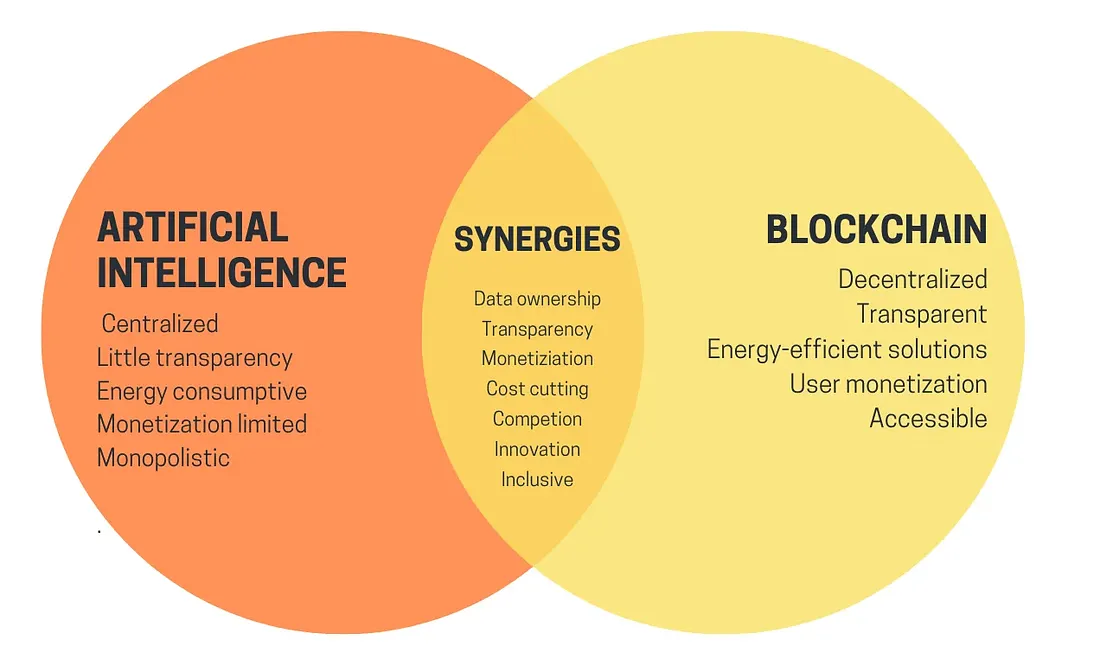
As the diagram suggests, AI's centralised nature contrasts sharply with blockchain's decentralised and transparent design. Bridging these systems could unlock the shared benefits of both, such as data ownership, accountability, and inclusion. Blockchain provides the mechanisms to make such integration real by embedding transparency and collective governance directly into the AI stack, turning decentralisation from principle into practice.
From Black Boxes to Transparent Systems
If decentralisation is the necessary direction for artificial intelligence, the question becomes how to achieve it across a system built on centralised foundations. The current AI stack is vertically integrated: a small group of firms controls compute infrastructure, the frameworks that define model design, and the coordination mechanisms that govern deployment.
Breaking this concentration requires more than policy incentives or open licences. It requires rebuilding the technical architecture of AI so that its key layers of hardware, software, and governance can operate independently while remaining interconnected.
Three layers define whether such decentralisation can succeed in practice.
Compute and Training Infrastructure (Hardware Layer)
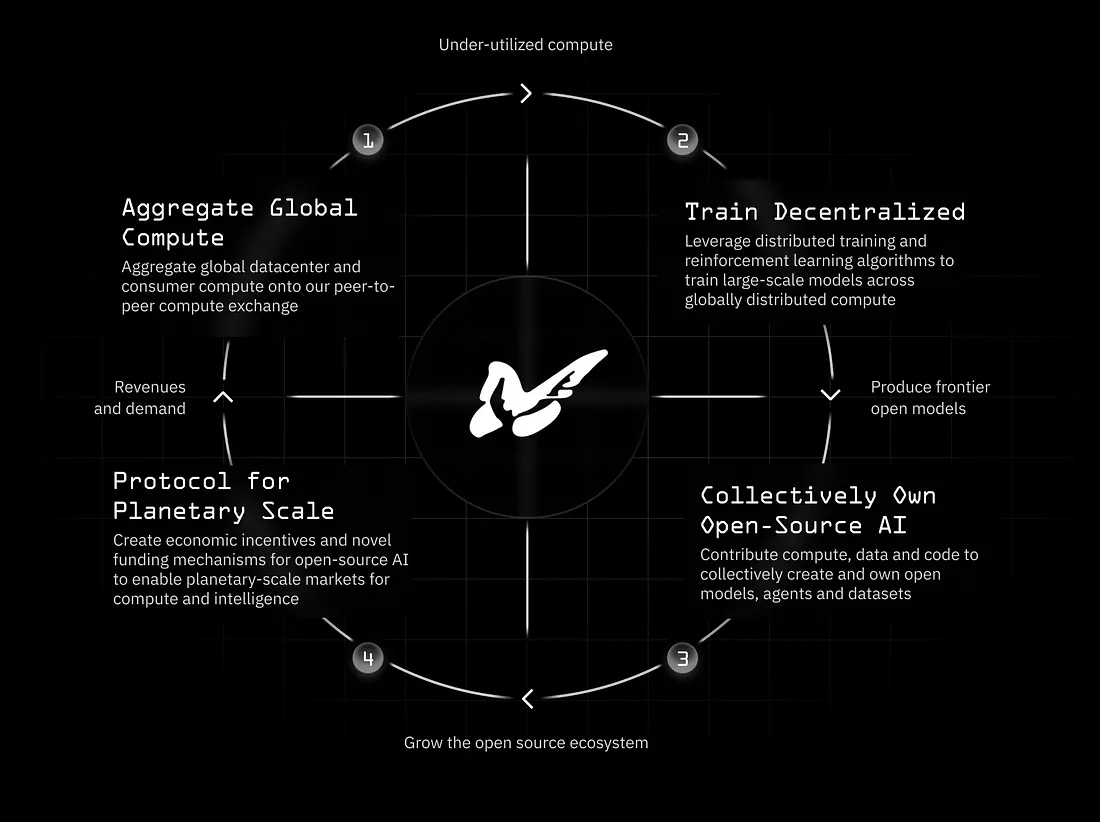
At the foundation of decentralised AI is the compute layer, where projects are exploring new methods to source and coordinate the hardware required for large-scale model training. The aim is to make use of idle or underutilised GPU resources and organise them into open, market-based networks accessible on demand.
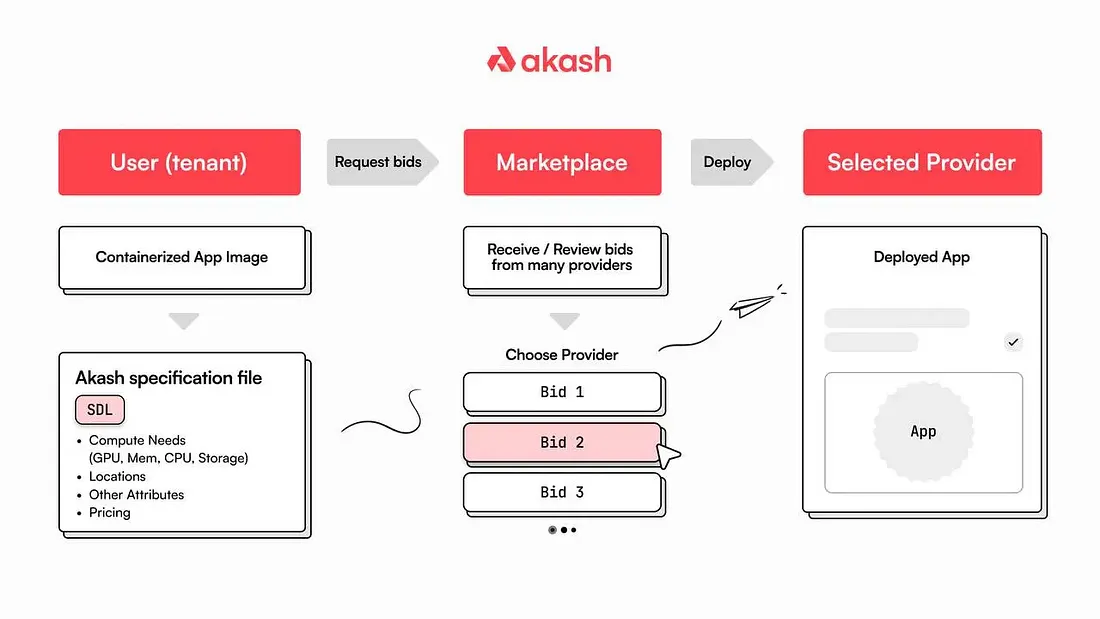
Akash Network is building a decentralised marketplace for cloud compute, enabling independent providers to rent out unused GPU and CPU capacity. Users submit deployment requests through a reverse auction process, where providers compete to offer the lowest price for compute. The protocol earns network fees from these transactions, while validators secure and verify the marketplace's integrity.
For users, Akash offers lower-cost and censorship-resistant access to scalable compute infrastructure; for providers, it creates a new monetisation channel for idle hardware. The model effectively transforms compute into a fluid, permissionless resource rather than a fixed cost locked behind corporate contracts.
Prime Intellect builds on this foundation by extending decentralisation from compute provisioning to full-scale training orchestration. Rather than merely allocating hardware, it coordinates distributed model training across many nodes, ensuring that each contributor's work is auditable and properly attributed. The system records provenance data such as model checkpoints, gradients, and training metadata on-chain, allowing researchers and developers to verify how a model was trained and by whom. Participants earn rewards for contributing compute or model updates, while users gain access to verifiable, collaboratively trained models.
Together, these initiatives illustrate how decentralised approaches are being applied to compute provisioning and model training. Rather than accessing fixed resources from central cloud providers, developers interact with networks where protocol rules govern pricing, verification, and coordination. This represents an early stage in the development of infrastructure intended to support decentralised AI systems.
Model Representation and Execution (Software Layer)
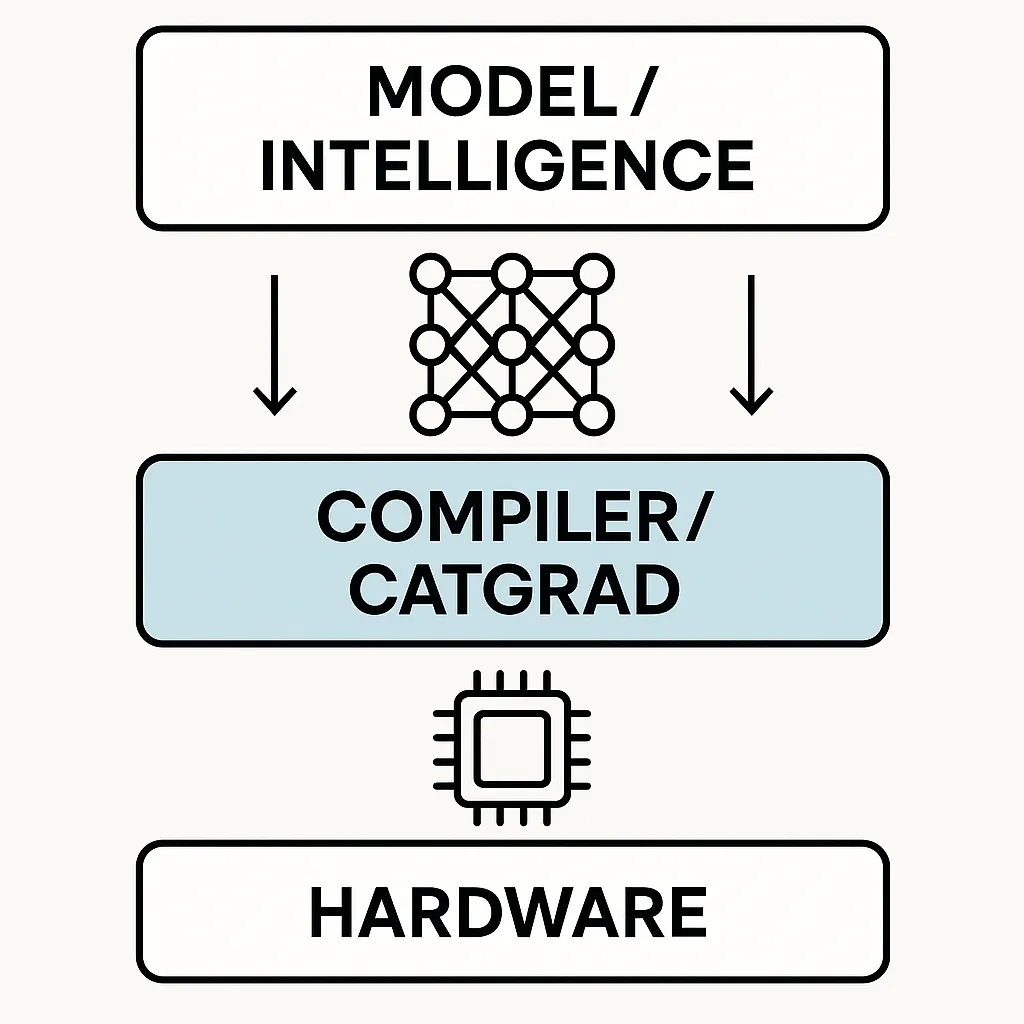
The software layer defines how intelligence is represented and executed. Most frameworks, such as PyTorch and TensorFlow rely on dynamic computation graphs that prioritise usability but obscure the underlying model structure, making verification and portability difficult. Catgrad (developed by Hellas) takes a different approach. It is a deep learning compiler that converts models into mathematical graphs before execution, producing static code that runs directly on hardware without depending on a framework. This design makes models faster, portable, and self-contained.
Because Catgrad represents models symbolically, every operation and data flow can be inspected and verified. Training and inference are compiled in advance rather than recorded during execution, ensuring deterministic behaviour and eliminating runtime dependencies. This enables transparent and reproducible AI pipelines that can be deployed across different environments without sacrificing trust or performance.
By redefining how models are expressed and executed, this layer introduces a new level of reliability and autonomy in AI development. It allows users to own, audit, and distribute models independently of proprietary ecosystems, creating a foundation for verifiable, composable intelligence that can operate across decentralised infrastructure.
Coordination, Verification, and Governance
The coordination layer connects the hardware and software pieces into a working system. It manages how compute tasks are assigned, verified, and paid for across independent participants. Without this layer, decentralised compute would remain fragmented and unreliable.
The Hellas Network provides this coordination function as a general-purpose compute marketplace. It can source compute from networks like Akash, and it can support distributed training and orchestration with systems such as Prime Intellect, but it does not rely on either. Participants can also bring their own hardware directly to Hellas or run workloads entirely within the network.
Hellas distributes models, including those compiled through systems like Catgrad, to whichever compute providers a user chooses, whether that is Prime Intellect, Akash, self-hosted clusters, or nodes connected directly to Hellas. Each model is deterministic, so given the same input, it always produces the same output. This makes verification simple: nodes submit output hashes or partial proofs that others can check without re-running the full computation. Once results match, the computation is confirmed, and rewards are released automatically.
Hellas functions as an interoperable coordination and settlement layer that can connect to external networks when useful or operate independently when needed. This gives users flexibility in how they source or provide compute.
The result is an open decentralised AI pipeline where models can be compiled, distributed, executed, and verified across different networks or solely within Hellas. Computation becomes portable, verifiable, and accessible to anyone who wants to contribute resources or run AI workloads.
The Decentralised Future of AI
Decentralisation is not about rejecting scale but about achieving it more openly and reliably. Centralised systems are efficient in the short term but place too much control and risk in a few operators. Distributed systems spread that risk and allow infrastructure to grow more stably and transparently. Artificial intelligence has reached a point where this kind of structure is both possible and increasingly necessary.
The model described here outlines how this can work in practice. At the hardware level, distributed compute networks reduce dependence on a few cloud providers. At the software level, verifiable model compilers make training and execution portable across different environments. At the coordination level, shared protocols and onchain verification ensure that work is executed correctly and rewarded automatically. Together, these layers create a functioning system for decentralised AI.
The main benefits are practical. Decentralisation makes AI infrastructure more transparent, reduces single points of failure, and lowers entry barriers for smaller developers and research institutions. It provides a technical foundation for building AI systems that can be trusted, verified, and maintained by a wider range of participants.
Key takeaways
Centralised AI concentrates risk and power — the three largest cloud providers control ~75% of global public cloud. Decentralised alternatives, built across compute, software, and coordination layers, offer a path to AI that is more resilient, verifiable, and open. Hellas is building the infrastructure and communications layer that makes this real.
Rebuilt as a Lemur Labs reading experience from the original Hellas research.
State of the Network
March 2026
Security, liquidity, volume, fees, user activity and supply across THORChain, in one read.
THORChainApr 8, 20265 min read
March delivered more of the same restraint. Volume came in at $801M, down again from February's $882M, as crypto markets spent the month attempting to find a base after a brutal February selloff. Retail sentiment stayed subdued, macro uncertainty persisted, and the kind of momentum that drives sustained trading volume simply wasn't there.
Volume & Fees
Large swaps
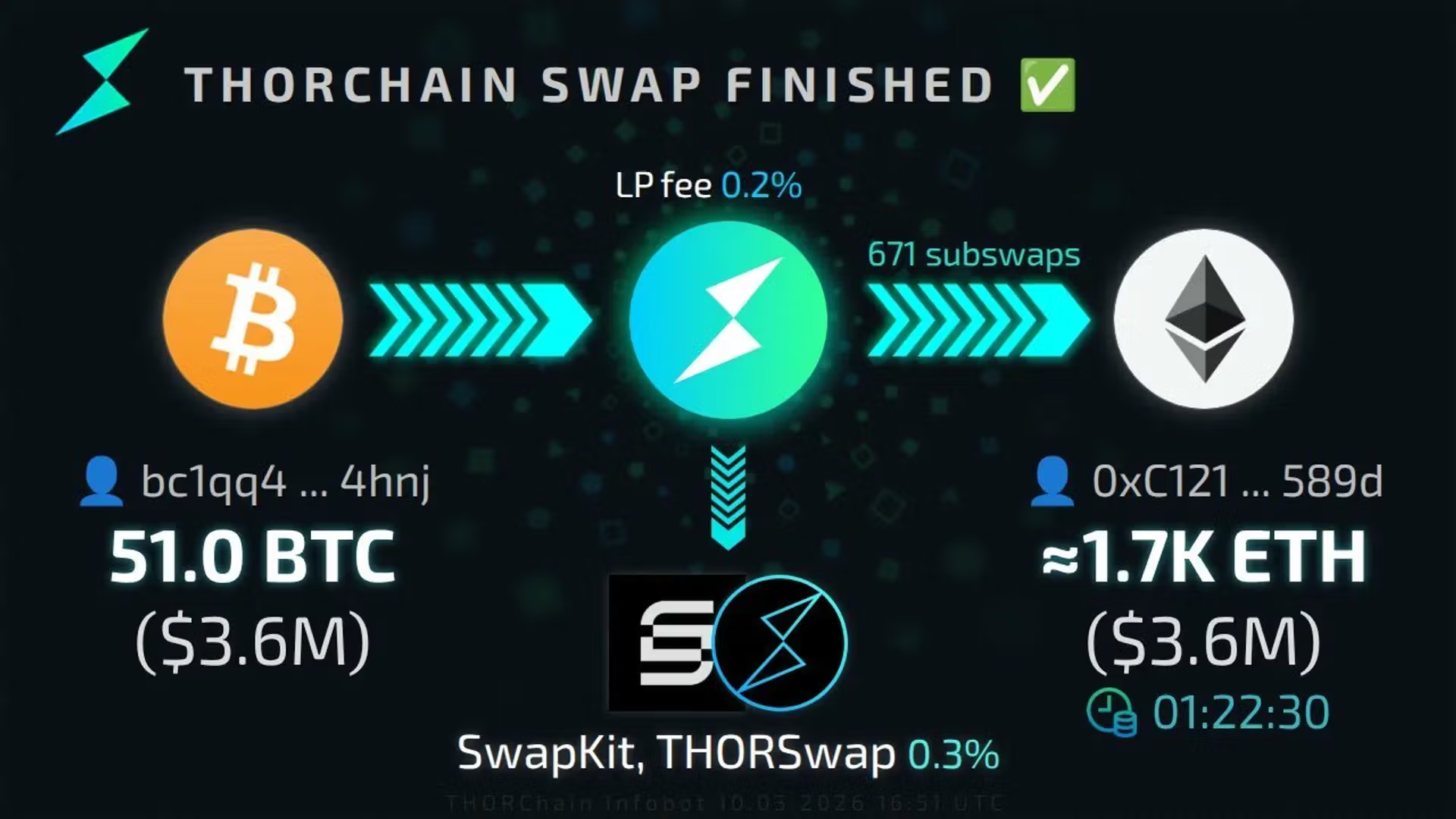
The standout swap of the month came on March 10th: 51.0 BTC ($3.6M) converted to ~1,700 ETH ($3.6M) in a single transaction, routed through THORSwap's frontend and powered by SwapKit. It executed across 671 subswaps with a 0.2% LP fee, plus a 0.3% affiliate fee. Clean execution at scale, exactly what the protocol is built for.
General volume
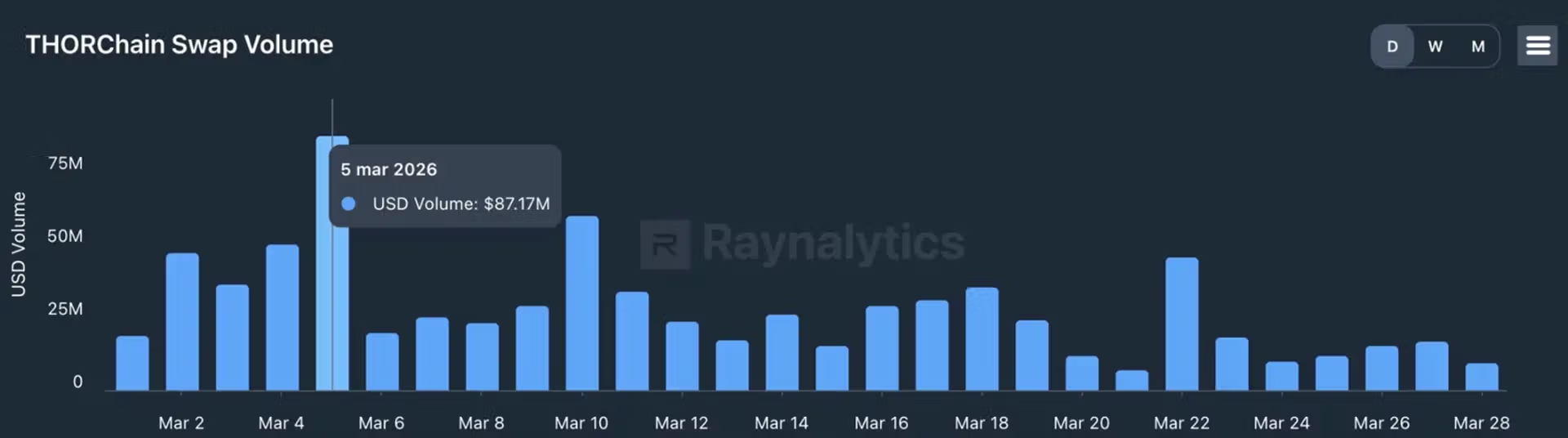
March daily volume clustered in the $15–50M range for most of the month, with one standout day: March 5th reaching $87.17M. Total volume in March came to $801M.
Swap paths
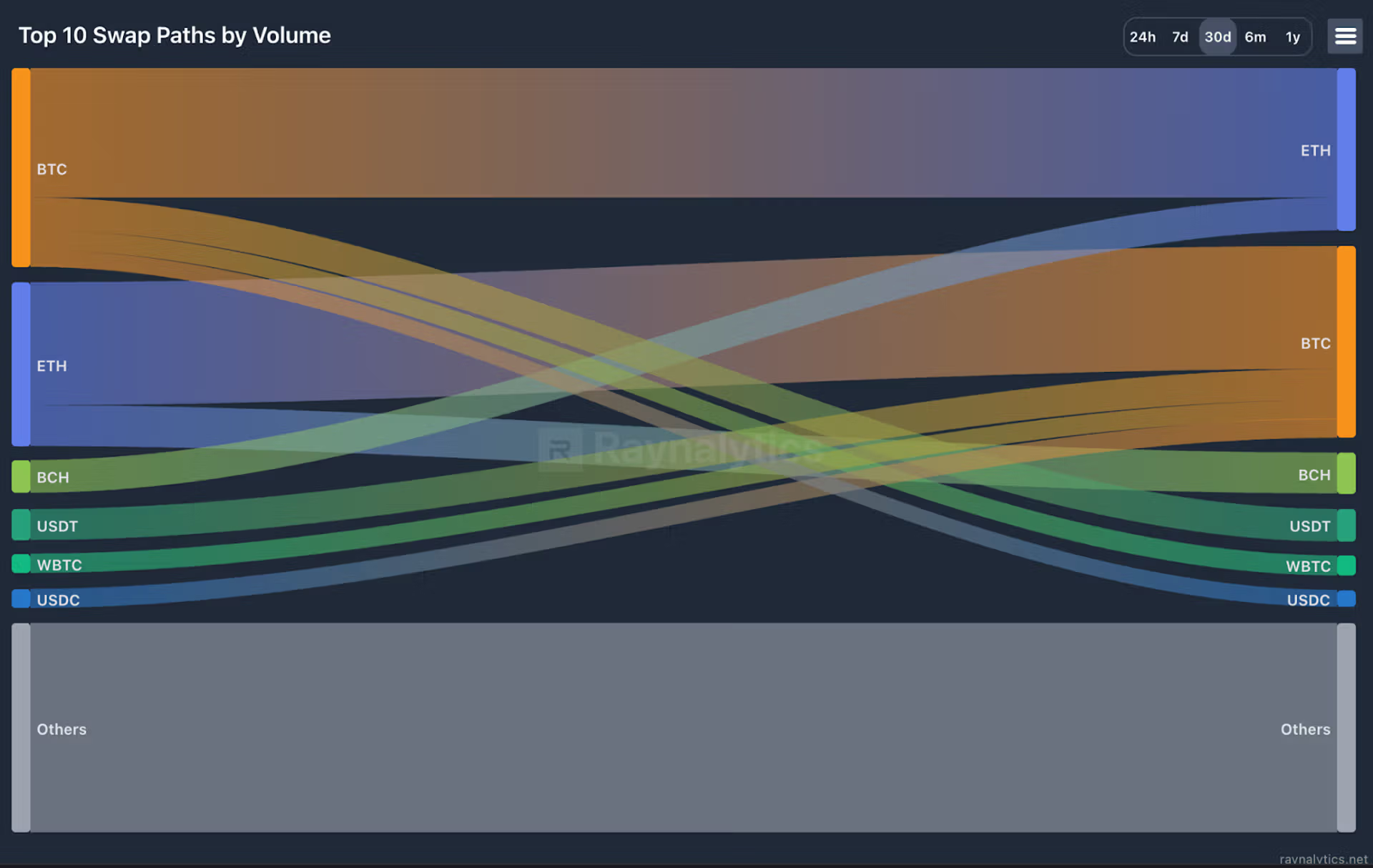
BTC and ETH continue to dominate, with BTC→ETH and ETH→BTC the two largest flows by volume. BCH holds a more visible presence this month, sitting above stablecoins, with USDT, WBTC and USDC rounding out the top routes. SOL is not yet in the top 10, though with native SOL swaps resuming around March 9th that should shift as liquidity deepens.
Fees collected
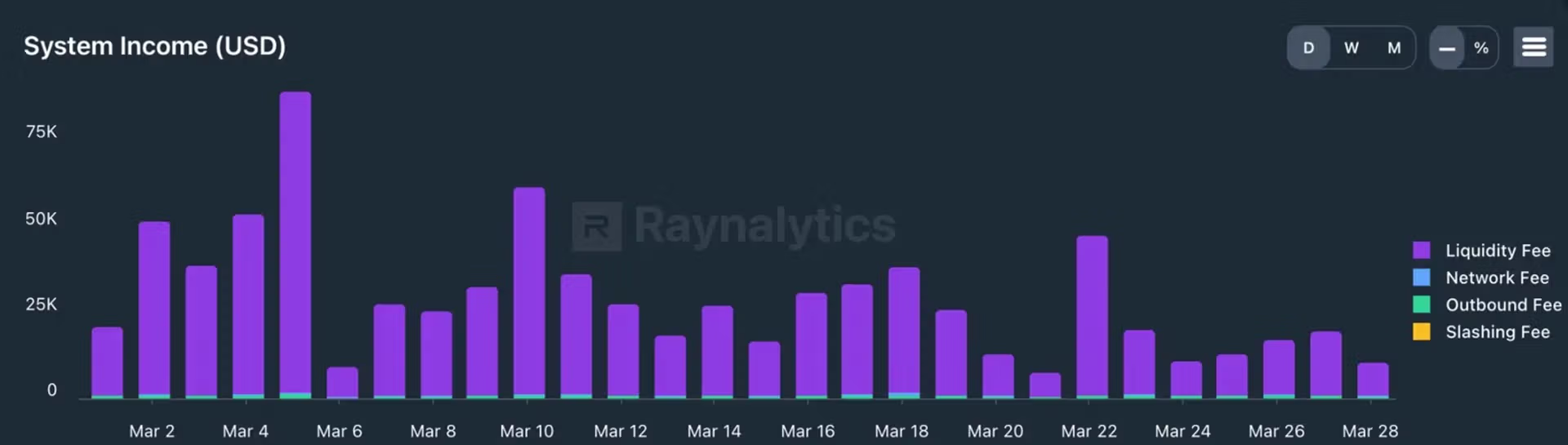
System income came in at $848K for March, down from February's $1.19M, tracking the lower-volume month. The March 5th spike is clearly visible in the income chart, producing the highest single day of the month.
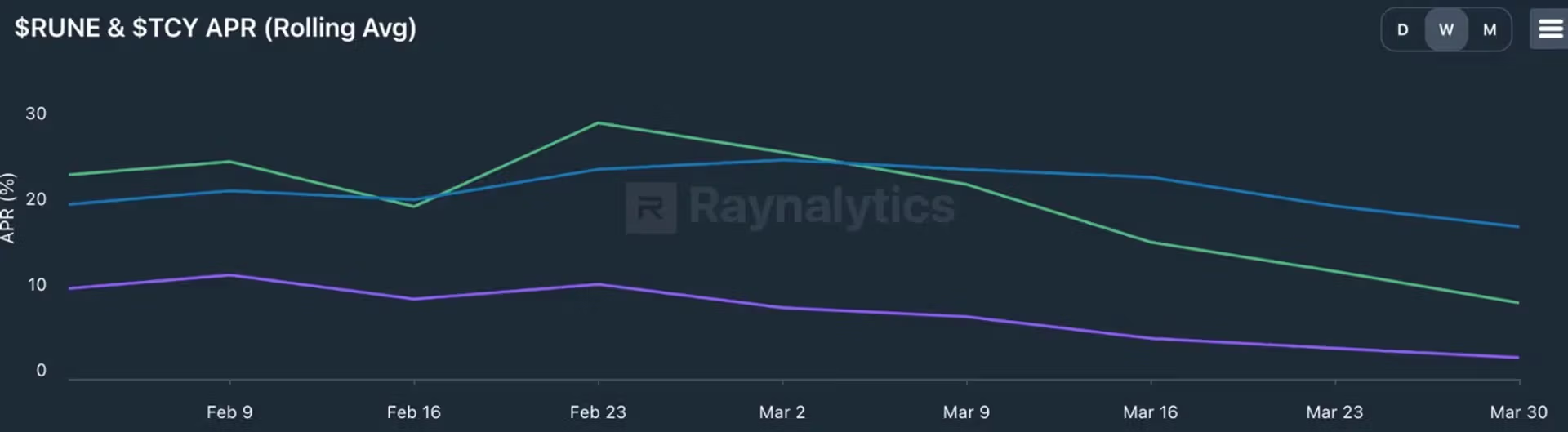
TCY & RUNE yield
Yields trended downward through March, reflecting the quieter volume environment.
RUNE APR rolled off its February peak near 25%, closing the month around 17% on the 7-day average.
TCY followed the same trajectory, compressing from roughly 10% toward the 1–2% range by month end.
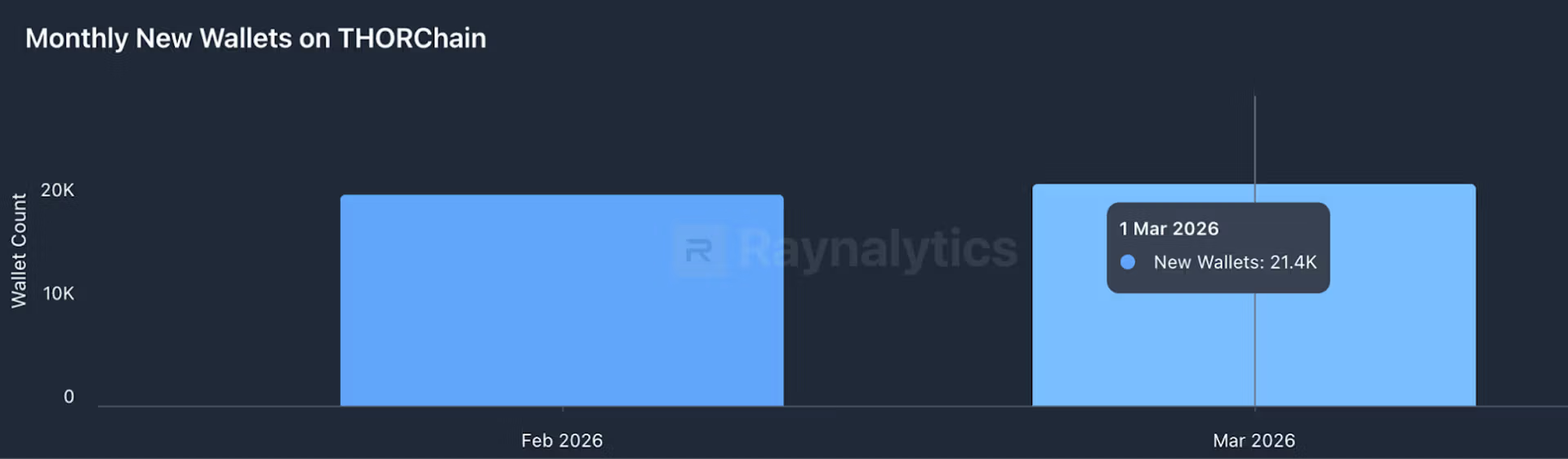
Retention & user acquisition
User acquisition held steady and was slightly higher in March despite the quieter trading environment.
Security & Supply
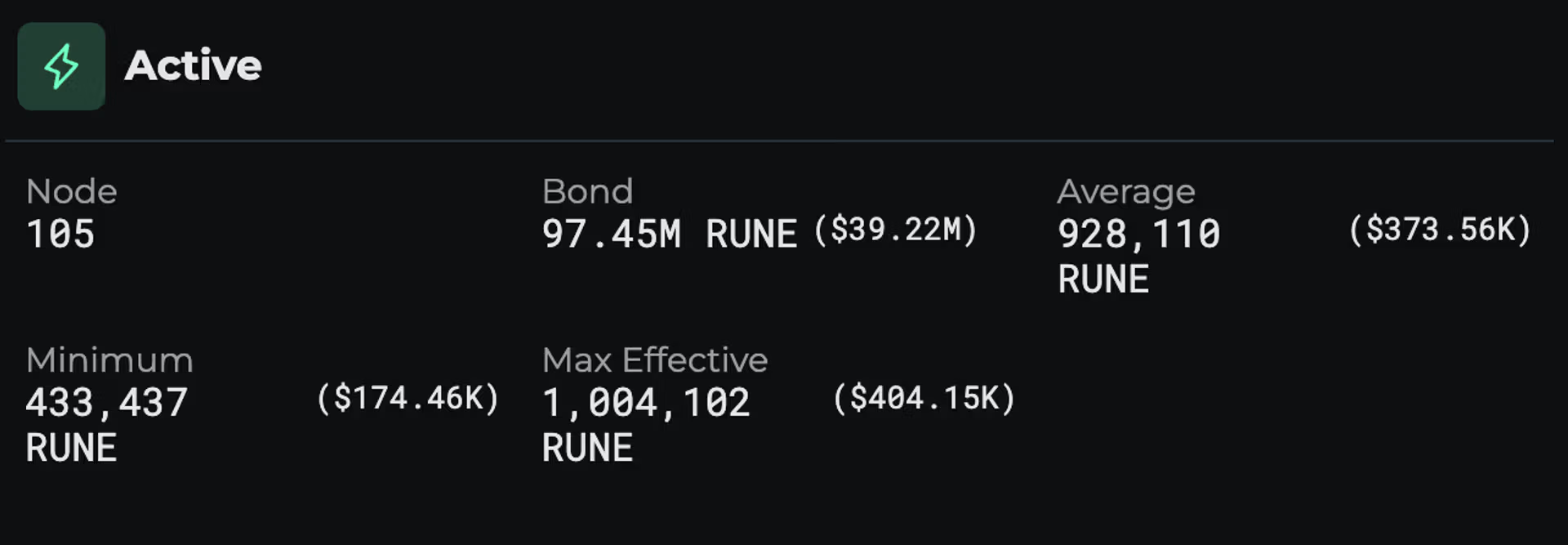
Bonds
Node count edged up to 105 in March, adding two operators from February's 103. Total bonded capital sits at 97.45M RUNE ($39.22M); the average bond per node holds at 928,110 RUNE ($373.56K). The minimum bond requirement stands at 433,437 RUNE ($174.46K), with the maximum effective cap at 1,004,102 RUNE ($404.15K).
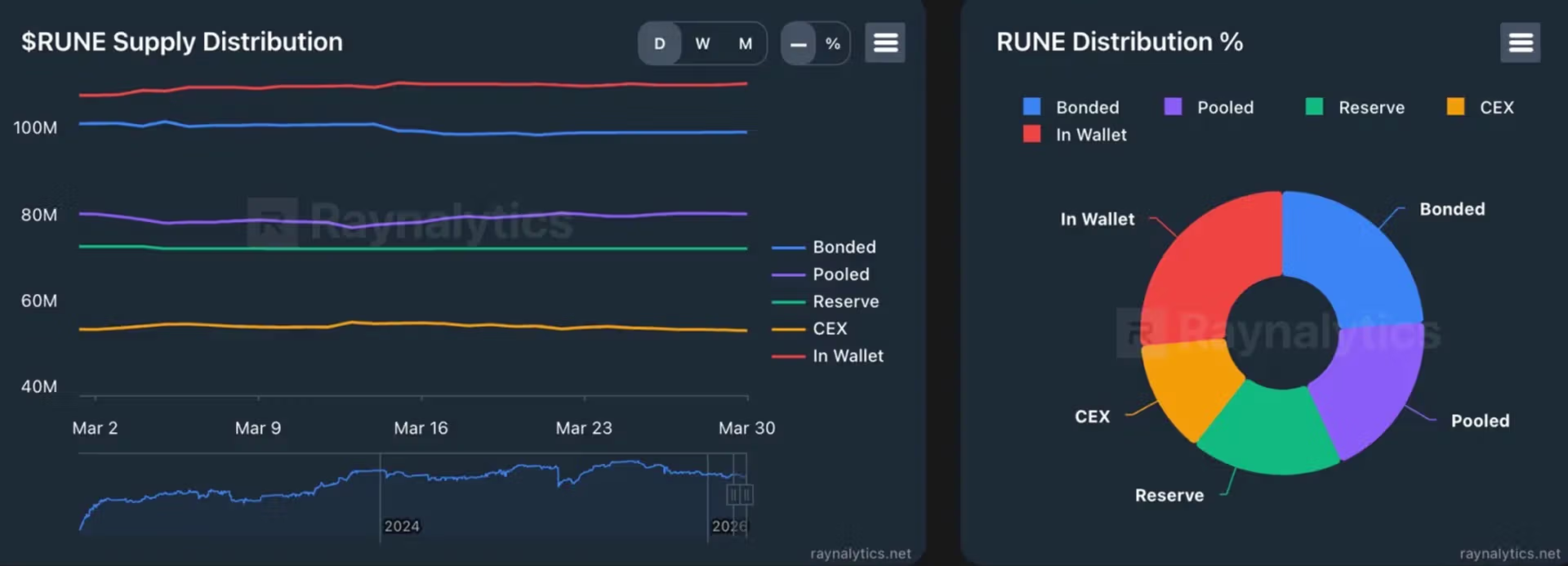
Supply
RUNE supply distribution remained essentially unchanged through March. Bonded, pooled, reserve and CEX holdings all held flat, with no meaningful shift between categories.
Burn
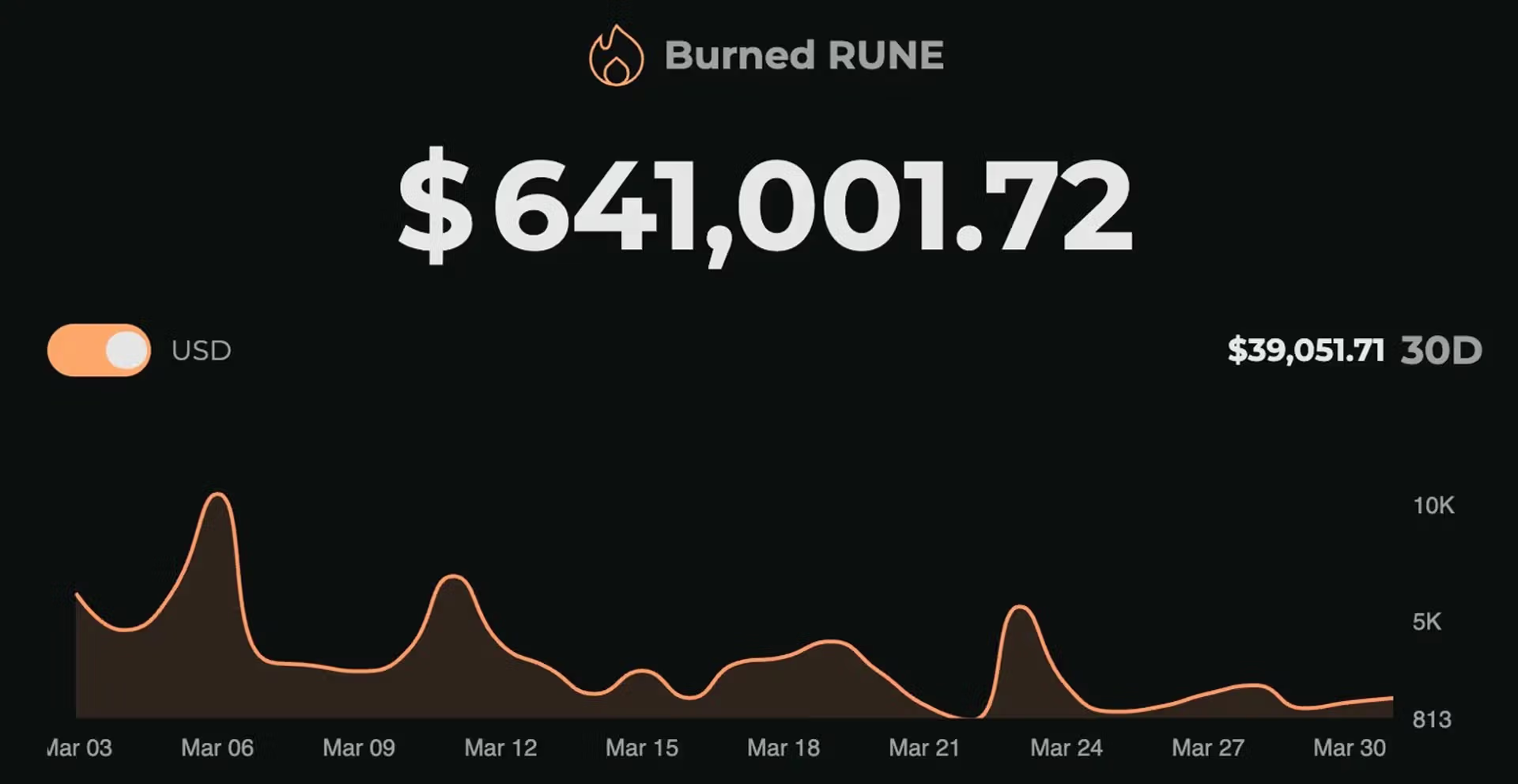
March burned $39K in RUNE over the 30-day period, down from February's $56K. Cumulative burns now sit at $641K lifetime. The mechanism keeps running automatically, removing supply regardless of conditions.
Frontends
Leaderboard by fees
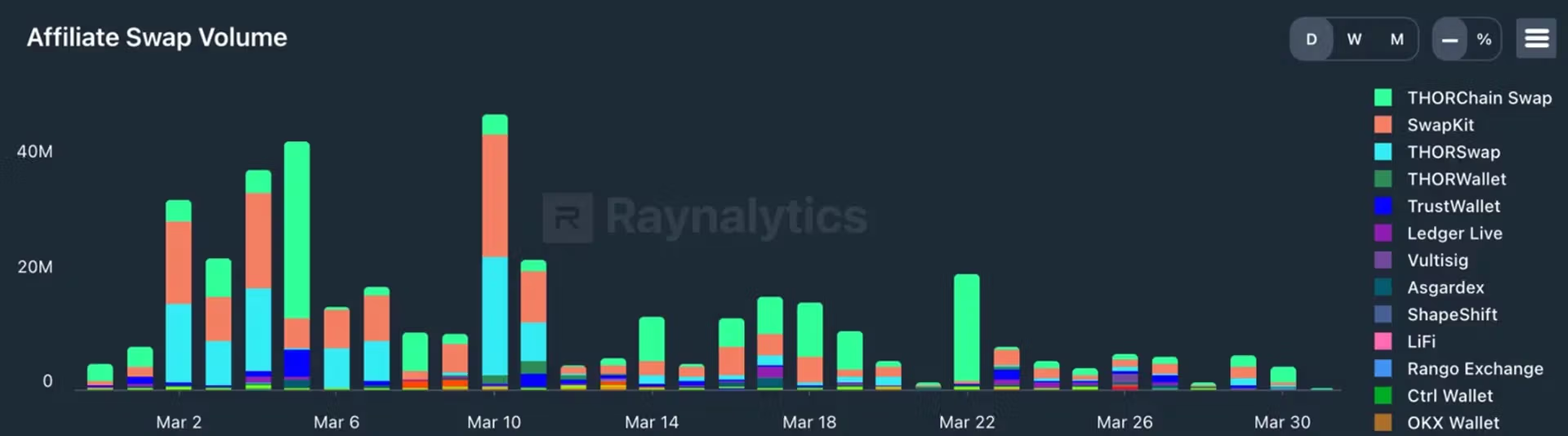
THORChain Swap's native frontend dominated the two highest-volume days, March 5th and 10th, with SwapKit taking a strong share on both spikes and forming the backbone of baseline affiliate volume. THORSwap appeared regularly, with TrustWallet, Vultisig and Asgardex contributing smaller but steady flows.
Swap count by affiliate
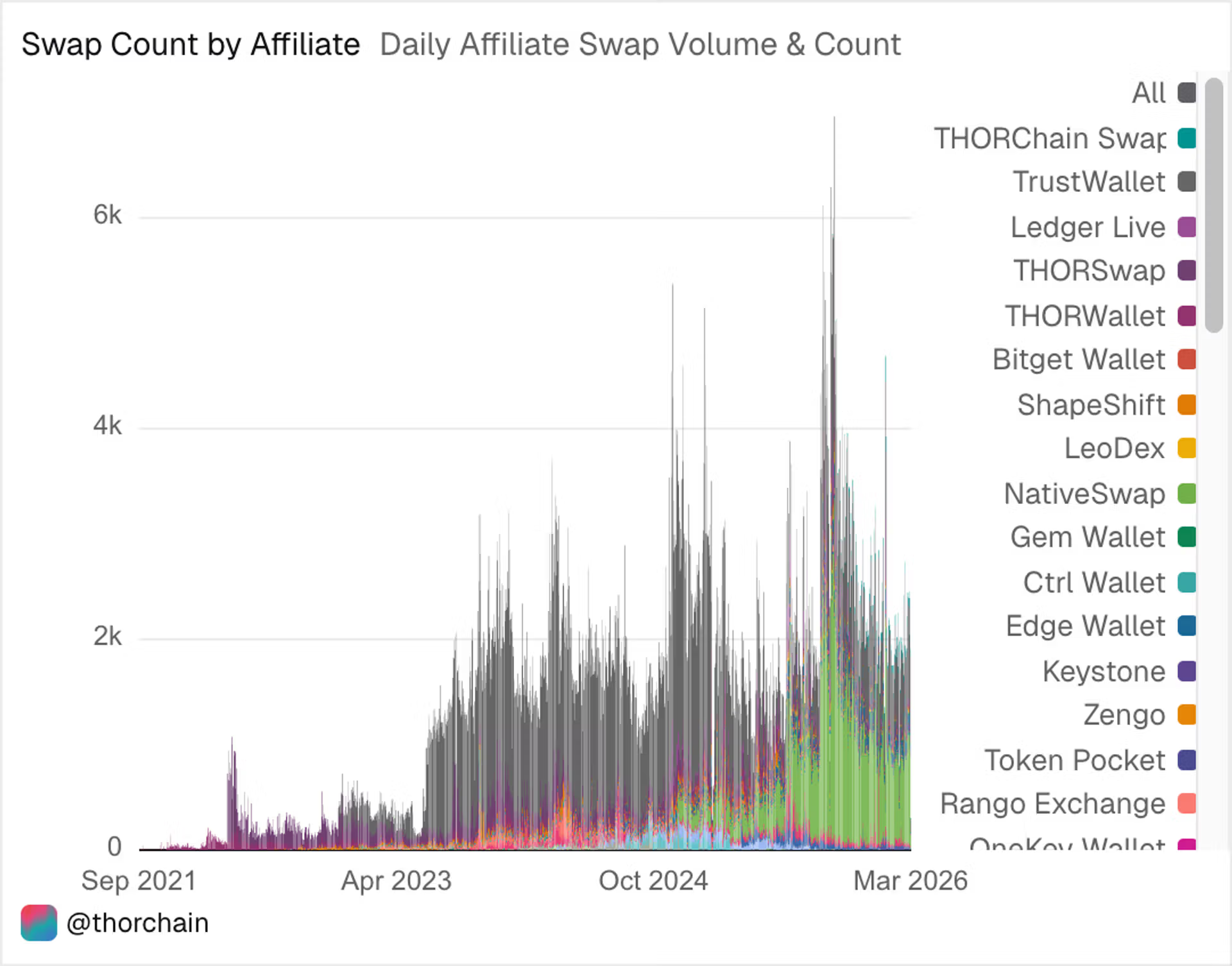
Daily swap counts have grown substantially since 2021 and have stabilised around 2k, with activity spikes following market trends. Affiliate diversification has also increased, showing that integrations across frontends such as Trust Wallet and Ledger are effective.
RapidSwaps
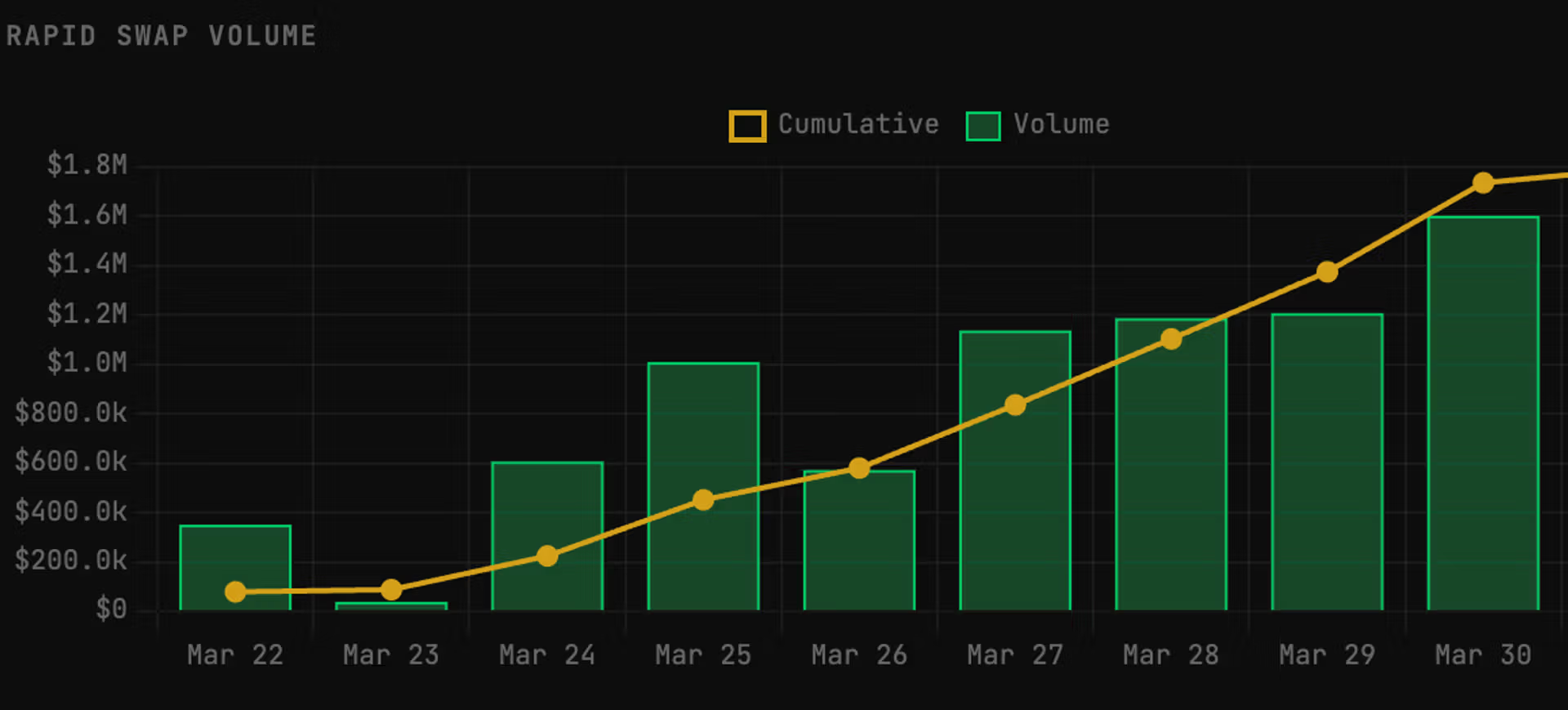
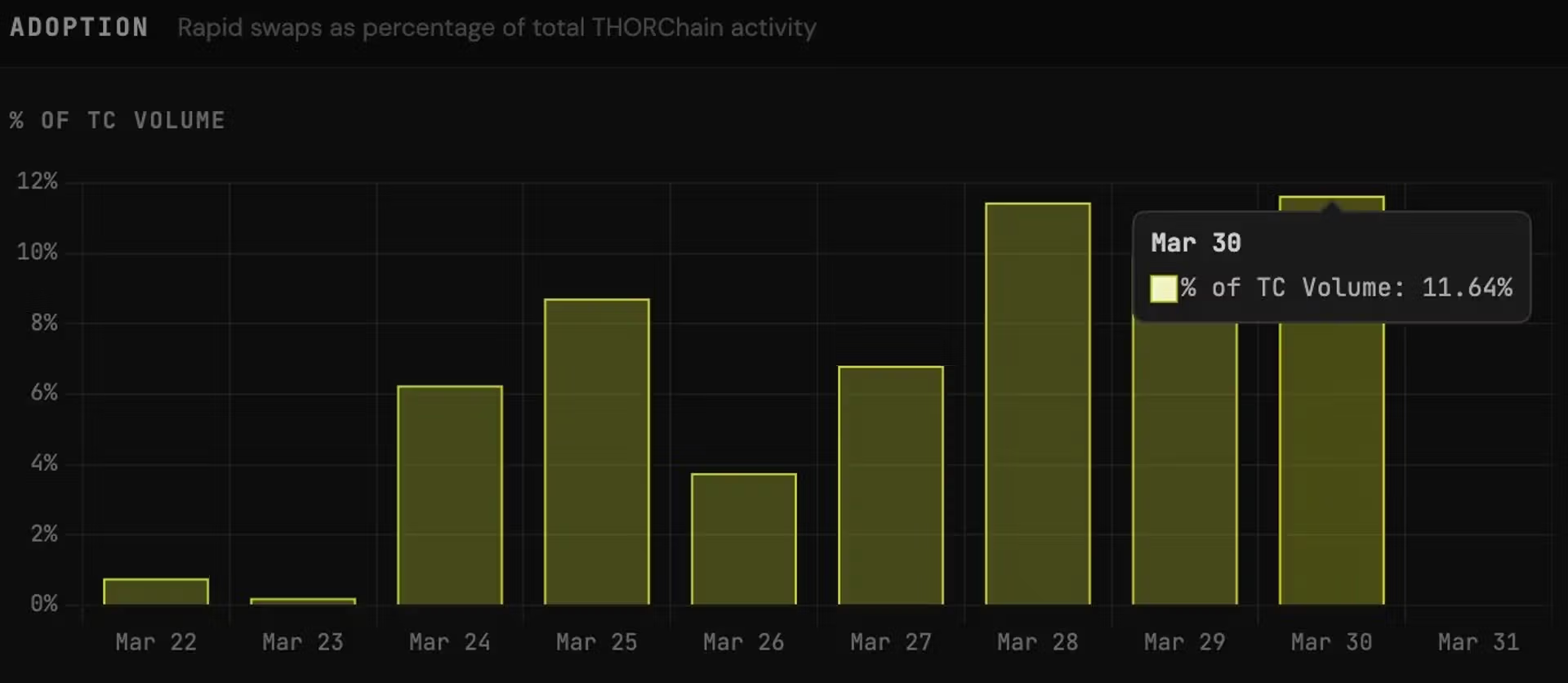
RapidSwaps picked up meaningfully toward the end of March. Cumulative volume reached $1.7M by March 30th, climbing from nearly $400k on March 22nd.
In volume share, RapidSwap went from under 1% of total THORChain volume on March 22nd to 11.64% by March 30th, all in just 9 days.
Key takeaways
March closed as another building month. Volume compressed to $801M, system income came in around $820K, and yields softened across both RUNE and TCY. None of that stopped the protocol from shipping: v3.16.0 activated, native SOL swaps resumed, and RapidSwap went from zero to 11.64% of total protocol volume in nine days. 105 nodes held firm, $39K burned, and new wallet creation ticked up slightly.
Data sources: RUNETools, THORCharts, THORChain Explorer, Raynalytics, Dune, BooneTools.
A dev spec on GitLab, turned into a story investors can actually read.
THORChainApr 9, 20265 min read
Source: adr-023-rune-supply-restructure.md on GitLab
THORChain's ADR023 proposes a restructuring of the RUNE supply framework with a clear objective: simplify tokenomics and improve how the asset is perceived and evaluated.
As the protocol has evolved, multiple legacy mechanisms have remained embedded in the supply structure. These no longer reflect how THORChain operates today, and they introduce unnecessary complexity, particularly for new market participants attempting to assess RUNE. ADR023 doesn't aim to modify core protocol mechanics, but to simplify the tokenomics, getting rid of minted RUNE that have never circulated.
The role of the Reserve
To understand ADR023, the first step is to understand the Reserve. Historically it played multiple roles within the protocol:
Block rewards: incentives to nodes and liquidity providers (inflation).
Inbound and outbound buffers: ensuring smooth settlement of swaps and covering gas costs.
Exploit buffer: a backstop to compensate users in case of protocol failures.
With the removal of block rewards more than a year ago, the Reserve is no longer actively used at the same scale. Today, the majority of it is simply non-circulating RUNE sitting within the protocol: not traded, not actively used, not part of market liquidity. As a result it carries no real economic value in the market, instead representing potential dilution if ever introduced into circulation. This creates confusion around RUNE's actual supply.
💰 Current tokenomics
The initial maximum supply was 500M RUNE. Since then several adjustments have taken place:
13.9M RUNE removed from tokens never migrated from BEP2 to native.
60M RUNE burned during ADR012 to support the old lending mechanism.
0.9M RUNE burned through the protocol's 5% fee burn mechanism.
This brings the current maximum supply to approximately 425.3M RUNE. But not all of it is actively circulating: 71.2M RUNE remain in the Reserve, largely unused since the end of block rewards, and 2.9M RUNE are allocated to Protocol-Owned Liquidity from the THORFi era. That leaves roughly 351.2M RUNE circulating and actively used (as of October 2025).
🔁 What ADR-023 changes
ADR023 proposes to remove the majority of this non-circulating supply: around 64.9M RUNE from the Reserve will be burned, with a small balance remaining for operational and safety purposes. Following this change, total supply will be reduced to approximately 360M RUNE, aligning much more closely with the actual circulating supply.
💡 Why this matters for investors
This change is not just cosmetic, it directly impacts how RUNE is valued. Investors typically use two key metrics: Market Cap (based on circulating supply) and Fully Diluted Valuation (based on total or maximum supply). Under the current structure, THORChain shows a gap between circulating supply (~351M) and total supply (~425M), creating an artificial overhang in FDV even though a large portion of that supply will never be usable.
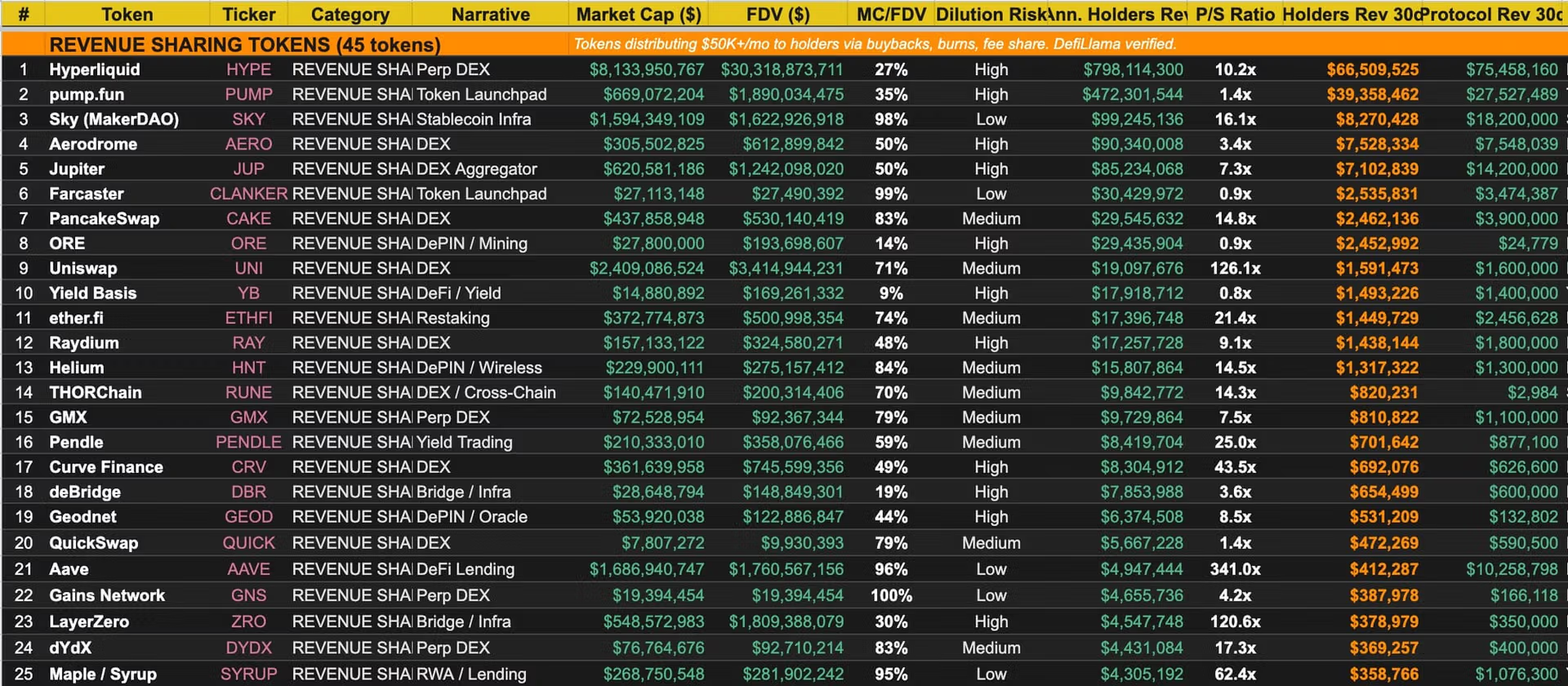
THORChain has recently been identified as one of the few profitable DeFi protocols. At the moment the MC/FDV ratio is around 70%, suggesting potential dilution. With ADR023 this ratio could move closer to 100%, and the price-per-share becomes more accurate and more attractive to investors.
Revenue-sharing tokens by MC/FDV. Source: DefiLlama / @DefiIgnas.
Less artificial supply → clearer valuation → better comparability with other protocols.
Conclusion
ADR023 is a structural simplification of RUNE tokenomics. It recognises that a large portion of the current supply is no longer relevant to how the protocol operates. The proposal has already passed; following implementation in an upcoming protocol upgrade, total supply will decrease to approximately 360M RUNE. This does not change how THORChain functions, but it does change how investors and traders approach RUNE.
How automated guards, the community and node operators took THORChain offline, block by block, on May 15, 2026.
THORChainMay 20, 2026Exploit Report #1
Decentralised defence is messy, fast and very public. This is the on-chain and off-chain timeline of how THORChain responded to the May 15, 2026 exploit, reconstructed from mimir changes, node votes and the developer Discord.
1 · Automated solvency guards fire first
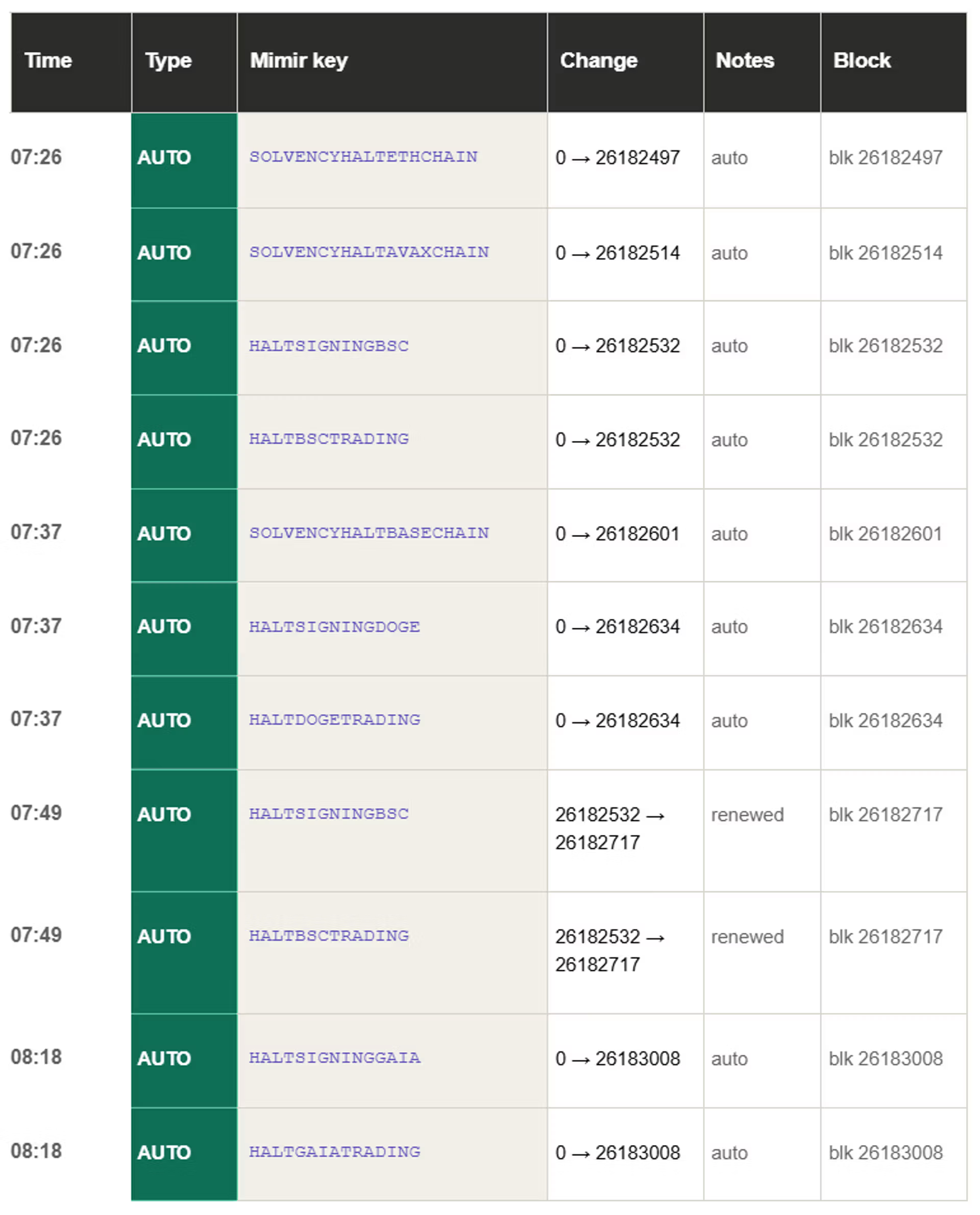
Before anyone typed a message, the protocol's own guards began tripping. From 07:26, solvency checks auto-halted affected chains one by one, ETH, AVAX, BSC, BASE, DOGE and GAIA, each writing a mimir key on-chain at the block the anomaly was detected. These are automatic, no human in the loop.
AUTO solvency halts, written per chain as anomalies were detected.
2 · The community spots it
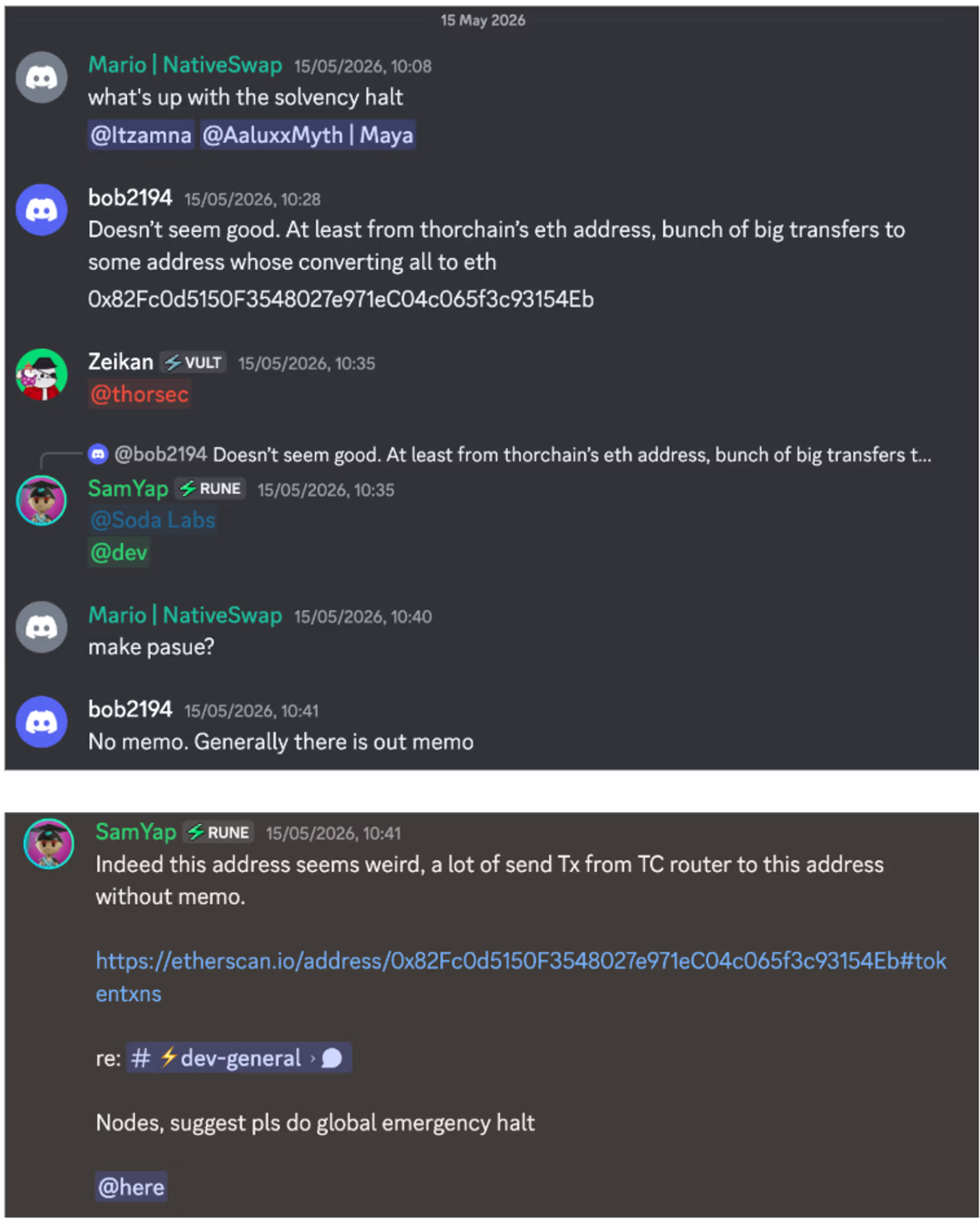
Almost in parallel, contributors in the developer Discord noticed the same thing the guards did: large, memo-less transfers leaving THORChain's ETH router to a single address. Within roughly half an hour the conversation moved from "what's up with the solvency halt" to an explicit call: nodes, please do a global emergency halt.
The detection thread, ending in a request for a global halt.
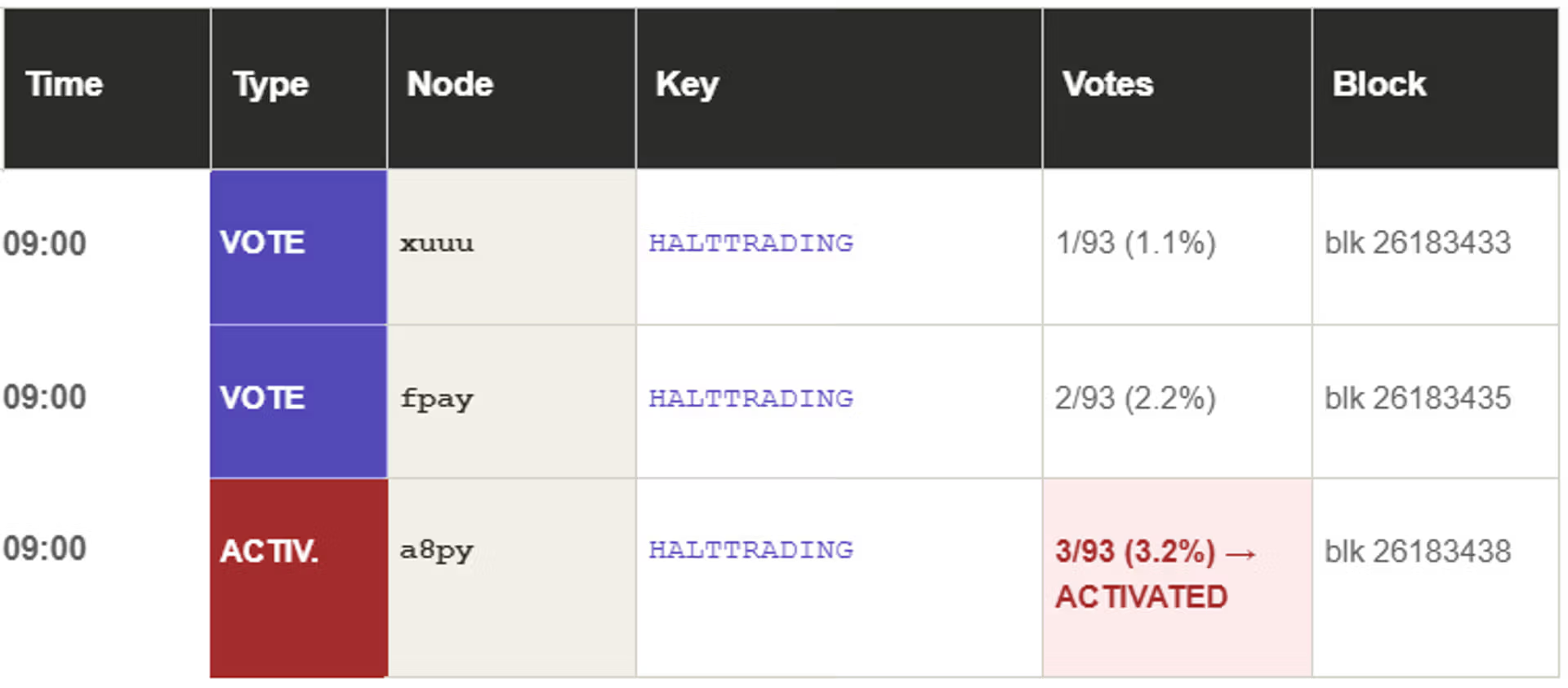
3 · Nodes vote to halt trading
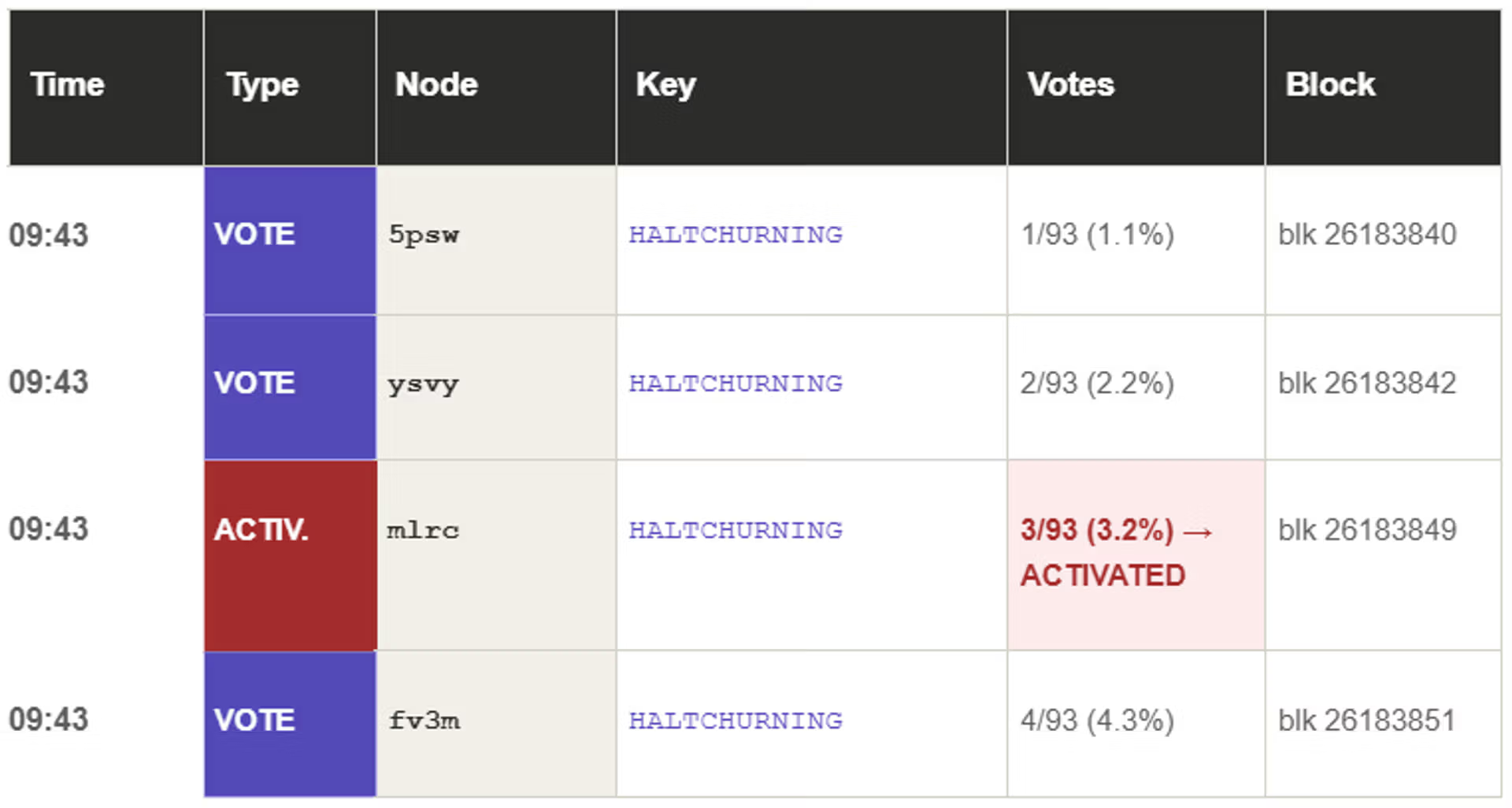
Halting THORChain is not a switch one person flips. Each protective action is a vote: once three of the 93 active nodes (≈3.2%) submit the same mimir, it activates. Trading was first, HALTTRADING activated at 09:00 on the third vote.
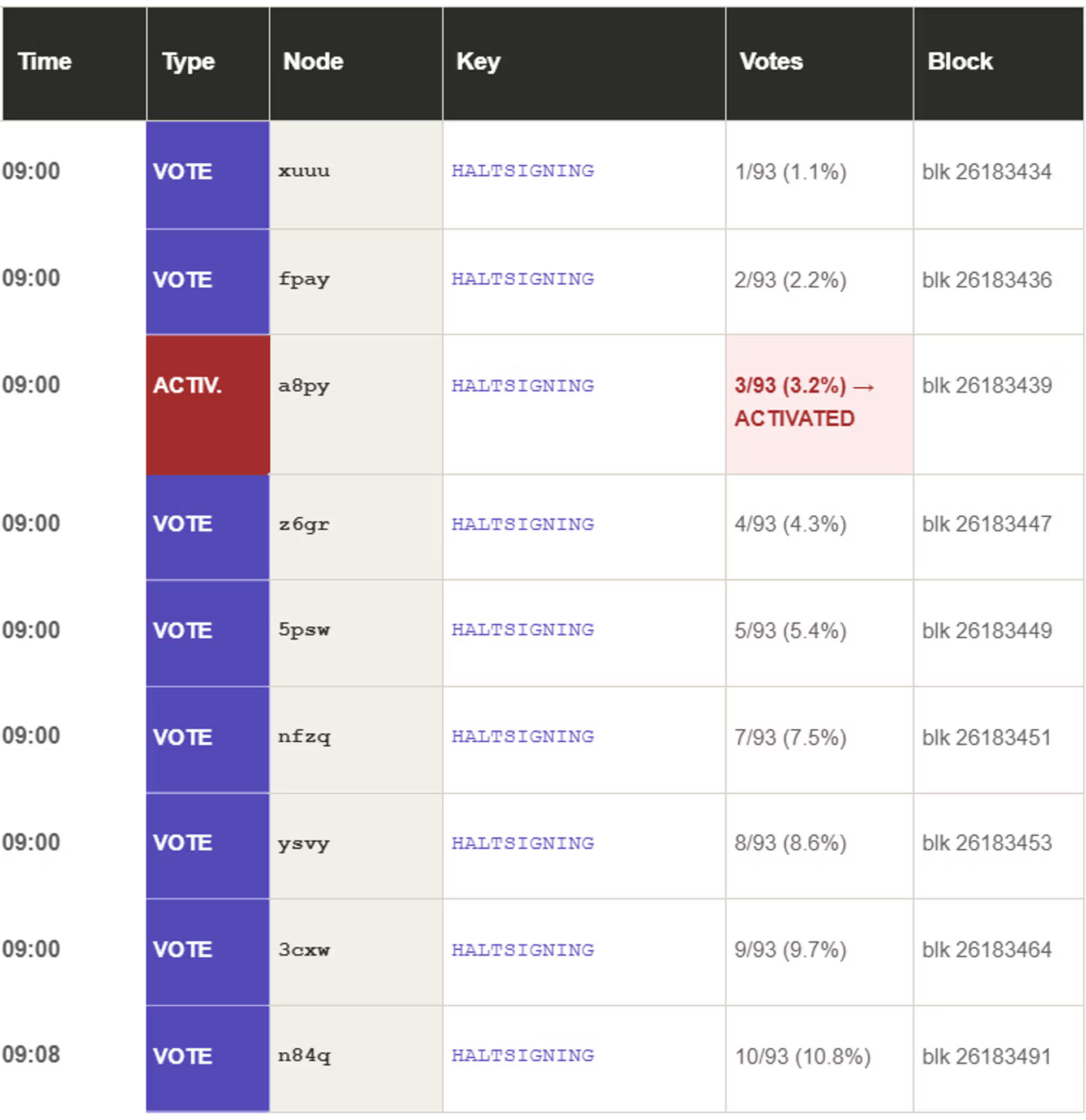
4 · Signing follows
With trading frozen, operators moved to stop the network from signing any outbound transactions. HALTSIGNING activated at the third vote and kept climbing as more nodes piled on, 10/93 within minutes, closing the door on outflows.
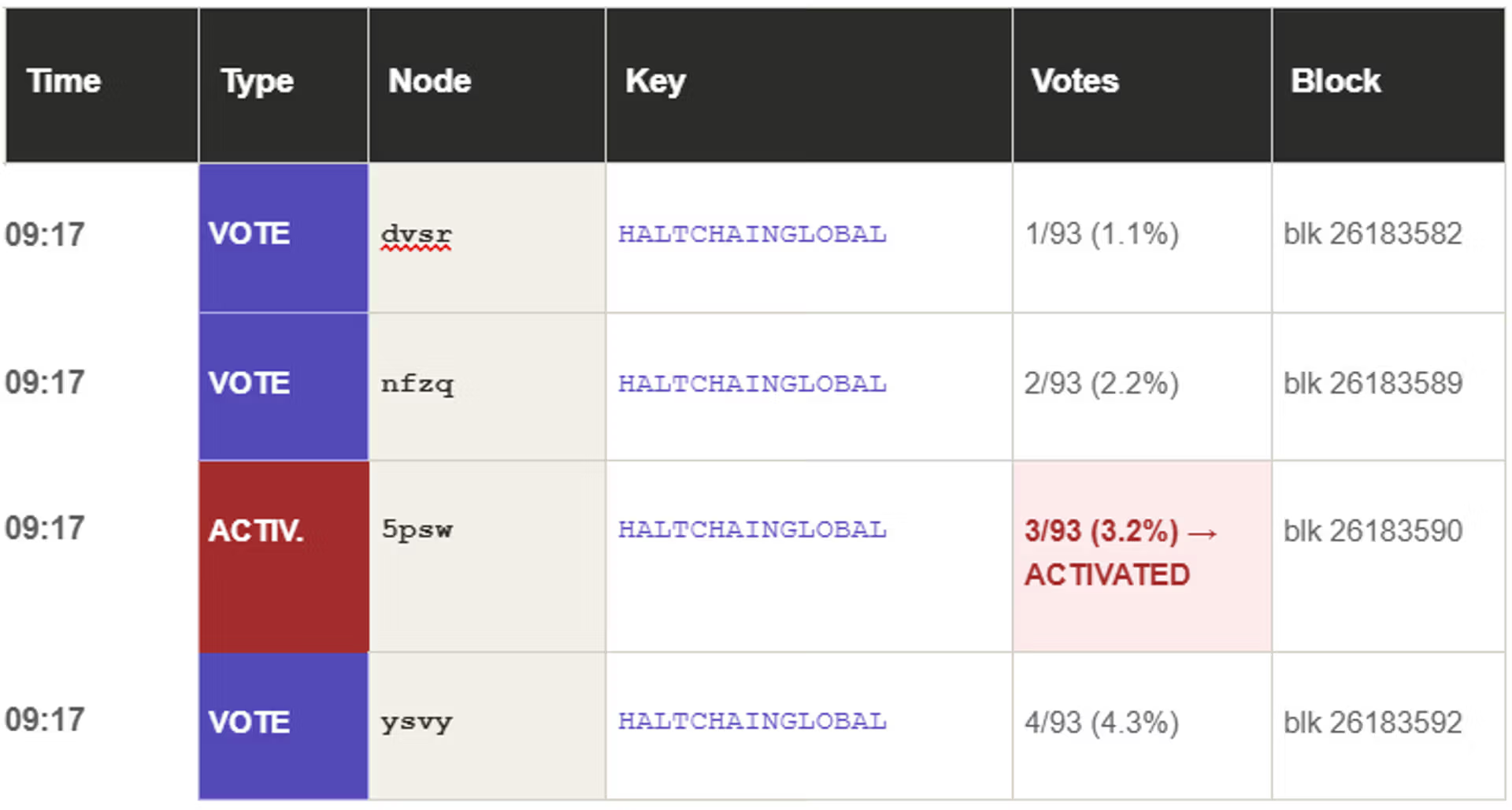
5 · A global chain halt
At 09:17, nodes escalated to HALTCHAINGLOBAL, taking every connected chain offline at once rather than chain by chain.
6 · Pausing churn, block by block
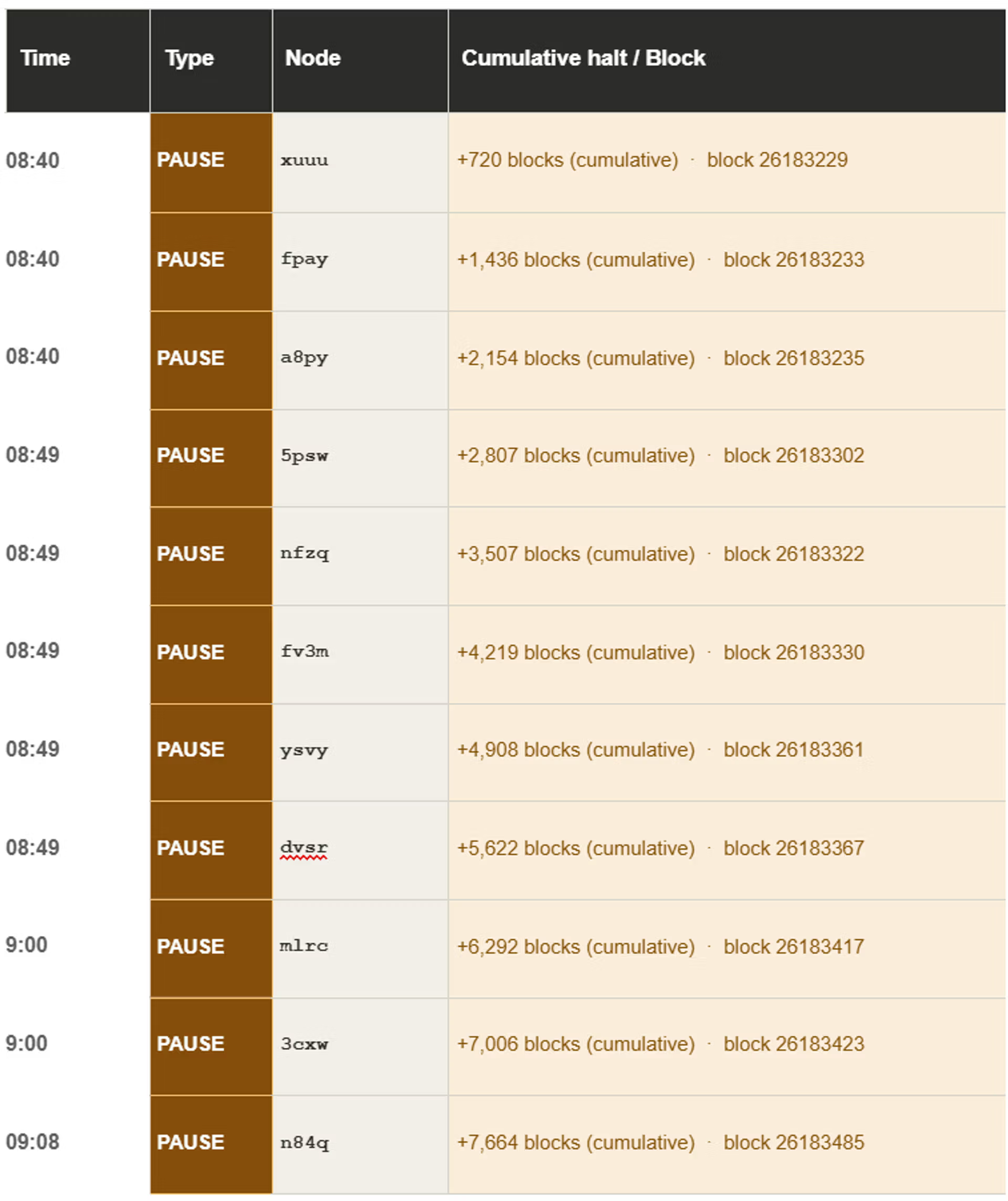
To stop the validator set from rotating mid-incident, operators repeatedly extended a churn pause. Each PAUSE pushed the halt further out, cumulatively past 7,600 blocks by 09:08, buying time to investigate safely.
Finally, HALTCHURNING was voted in at 09:43, fully freezing the node set.
From first auto-halt to a fully frozen network: a couple of hours, dozens of independent operators, all on the public record.
How AI is transforming search engine optimization and reshaping content strategy in 2026.
Lemur LabsAug 23, 20268 min read
Your customers are asking AI what to buy, and most brands have no idea what it tells them. Large language models have become how people decide what to buy, and most marketing teams have never checked what those models say about them.
The person who once opened Google and worked through a page of blue links now asks ChatGPT, Claude, or Gemini directly and acts on the single answer that comes back. There is one recommendation in that exchange, and either your brand is in it or your competitor's is.
Being ranked and being recommended are two different outcomes
Search rank tells you where you land on a results page. It tells you nothing about whether a model names you when a customer asks what to use, and a model can hold a completely accurate description of your product while sending every open question to somebody else.
We benchmark three things instead:
What a model says when prompted
What a model says without prompting
The brands you appear beside
Tracking these continually tells us where to concentrate effort, which claims to press, and when a content strategy needs to change.
The audit shows you how models describe you, in their own words
Most reporting gives you a number. A visibility percentage tells you whether you are present, and almost nothing about what a customer actually reads when your name comes up. The description is what does the persuading.
Our audit provides four outputs that conventional reporting does not cover:
The words models reach for. Every brand accumulates a stock vocabulary inside these systems. Nobody at the company chose those words.
The balance of sentiment over time. How many mentions read positive, neutral, or negative, and which way that ratio has been moving.
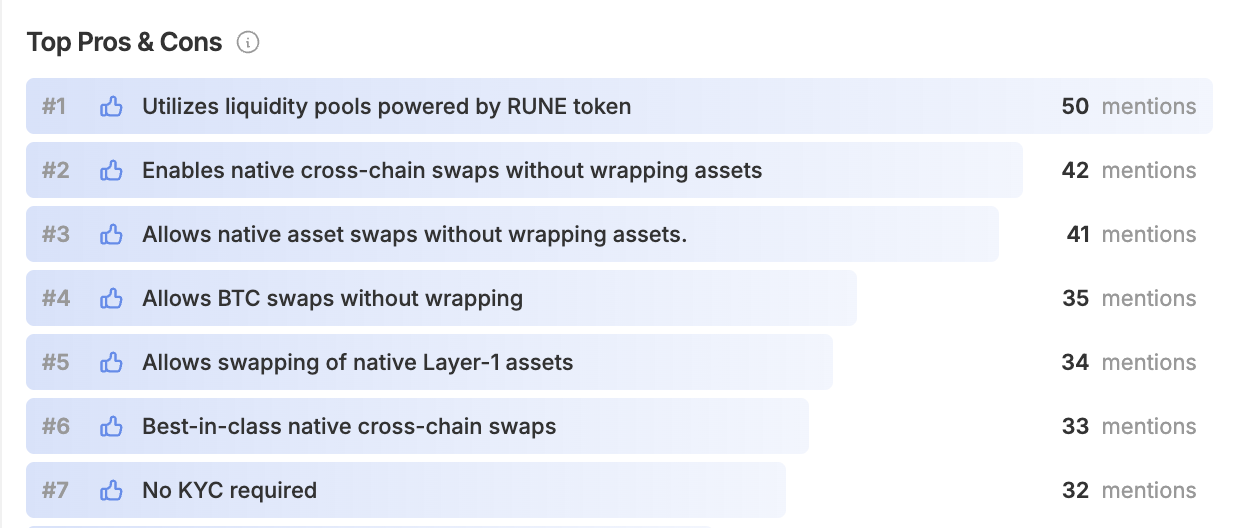
The pros and cons models repeat. Models settle on a handful of strengths and objections and restate them across thousands of answers. Some of those objections are outdated.
The places you never appear. The questions in your category where your name does not come up at all.
Together these tell you something a traffic report cannot. You learn what a model believes about you, how confident it is, and which of those beliefs are costing you customers.
There is no point writing anything until you know which claims already carry weight and which objections need answering.
What we deliver
Every engagement produces three things. We keep the structure fixed so you know what arrives, and we adjust the depth of each part to what your business actually needs.
Making your site readable to machines
AI systems read your website differently from how a person does, and differently from how Google does. They look for a plain instruction file telling them which parts of the site they may read, a curated index pointing them at the pages you most want quoted, and structured labels in your page code that state what your company is and how your pages relate.
Building a citation strategy that models respect
Models draw from a limited set of sources they have learned to trust, and that set is much smaller than the open web. We identify which specific publications, directories, documentation sites, and comparison pages already appear in AI answers for your category, then filter that list down to the placements you can realistically earn.
Working out the prompts and content you need
Models decompose a customer's question into narrower queries before they search anything, which means the language on your page needs to match how the retrieval works rather than how your marketing sounds. We map the questions customers ask in your category, the prompts where competitors appear and you do not, and the gaps preventing models from understanding what you sell.
How we work with clients
Distribution has changed and your customers changed with it, which makes this a business question rather than a marketing tactic. We work in three ways, and they differ by how much of the work you want to carry yourself:
Start with an audit. A one-off engagement telling you where you stand and what to fix first, committing you to nothing further.
Add strategy and direction. Everything in the audit, plus the citation targets, the content roadmap, and ongoing consulting for a team that will execute in house.
Hand over the execution. We produce the pages, publish against the roadmap, and keep tracking how the answers move.
FAQ
What is the difference between AI visibility and AI recommendation?
Visibility means a model mentions your brand when asked about it directly. Recommendation means the model suggests you unprompted when a user asks what to use. A brand can score high on the first and low on the second, and the second is where buying intent exists.
Is this just SEO with a new name?
The two are not the same discipline. SEO optimises for where you land on a results page, while this work optimises for being quoted inside a generated answer. The technical groundwork overlaps heavily and serves both channels, which is why we treat them as complementary rather than competing.
Do we need to change what our current team or agency is doing?
Usually not in any significant way. Our role is often to give your existing people better direction rather than to replace anyone, and where we do recommend changes we explain the reasoning and let you decide.
How long before we see movement?
The audit gives you a position quickly. Movement in model answers typically shows over one to two quarters, depending on how much existing coverage you have to build on.
Which models do you track?
Every major platform a buyer is realistically using, which currently means ChatGPT, Claude, Gemini, Google AI Overviews, Perplexity, and Grok.
What does an engagement cost?
The audit is a fixed one-off fee. The other two are monthly, priced on how many prompts we track, the languages and regions in scope, and how much production you want us to carry. We quote after we understand what you already have.
Lemur Labs AI SEO service overview and capability guide.


















 Research, transformed